GTA lawns should be core-aerated once per year, ideally in early fall (late August to mid-September) when cool-season grasses are actively growing and can fill the aeration holes quickly. Core aeration removes small plugs of compacted clay soil to let air, water, and fertilizer reach the root zone — the single most impactful annual maintenance task for most Greater Toronto Area lawns.
Key Facts
- • Greater Toronto Area soils are predominantly glacial clay till — one of the most compaction-prone soil types in Canada, making aeration especially important for GTA homeowners compared to properties in sandier regions.
- • According to the University of Guelph Turfgrass Institute, core aeration improves water infiltration by up to 6× on compacted clay soils and reduces fertilizer runoff by allowing nutrients to reach the root zone directly.
- • Professional core aeration for a standard GTA residential lot (3,000–5,000 sq ft) costs $100–$200 and takes 30–60 minutes with commercial equipment.
If you own a home in North York, Vaughan, Richmond Hill, Markham, or Scarborough, your lawn is almost certainly sitting on compacted clay soil — and it's quietly strangling your grass from below. Lawn aeration is the fix. This guide tells you exactly when to do it, why it works, and what to expect.
What Is Lawn Aeration?
Lawn aeration — specifically core aeration — uses hollow metal tines to pull small cylindrical plugs of soil out of your lawn. These plugs are typically 3 inches deep and pulled every 4–6 inches across the entire surface.
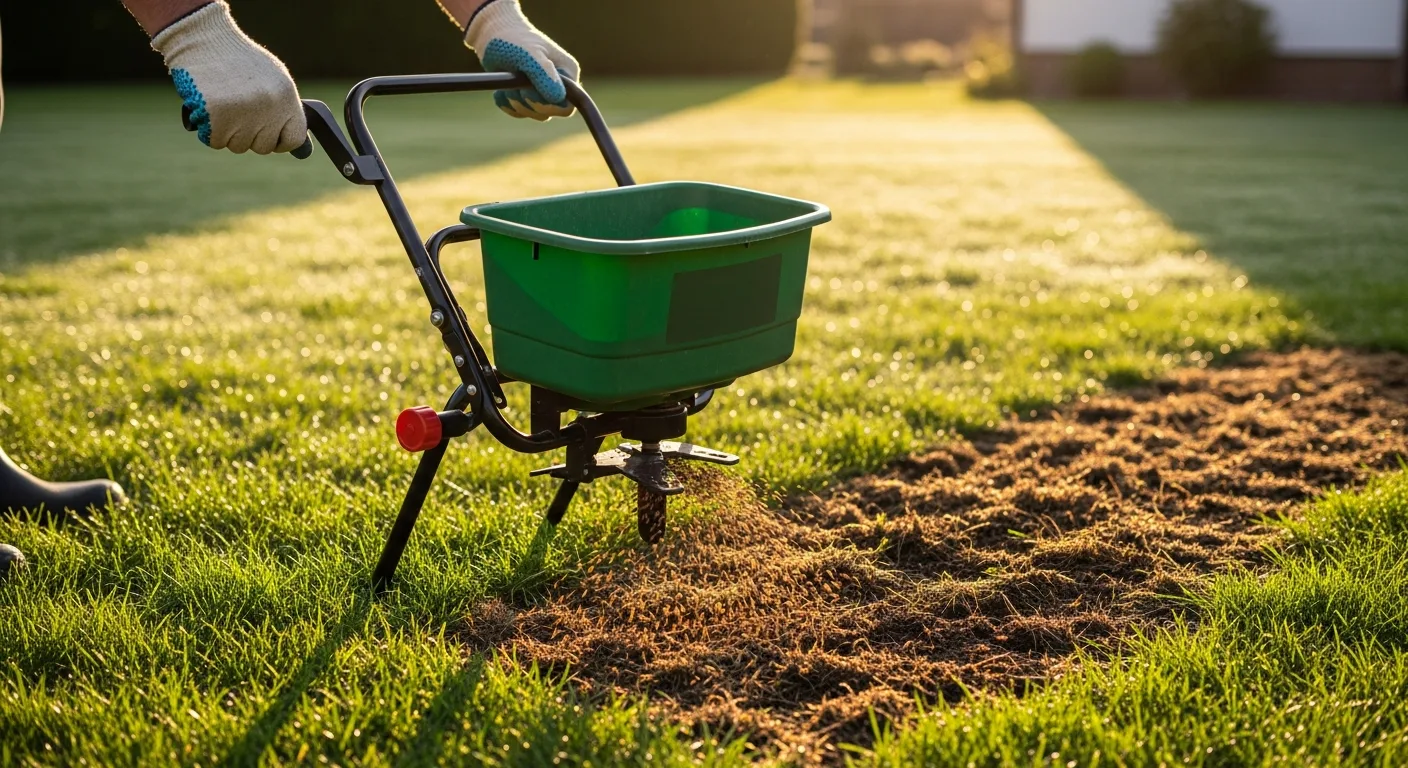
The result is hundreds of open channels running from the surface down to the root zone. Air, water, and fertilizer that used to run off the compacted surface can now reach the roots directly. The pulled plugs are left on the lawn and dissolve naturally within 2–3 weeks, returning organic matter to the soil.
Core Aeration vs. Spike Aeration
Not all aeration is equal. There are two main methods:
- Core aeration: Removes soil plugs. Relieves compaction and creates genuine channels. Strongly recommended for GTA clay.
- Spike aeration: Pokes holes without removing soil. Can actually worsen compaction around each hole. Suitable only for sandy soils.
For GTA lawns, always use core aeration. Spike aeration shoes and rolling spike aerators are largely ineffective on clay-heavy soil.
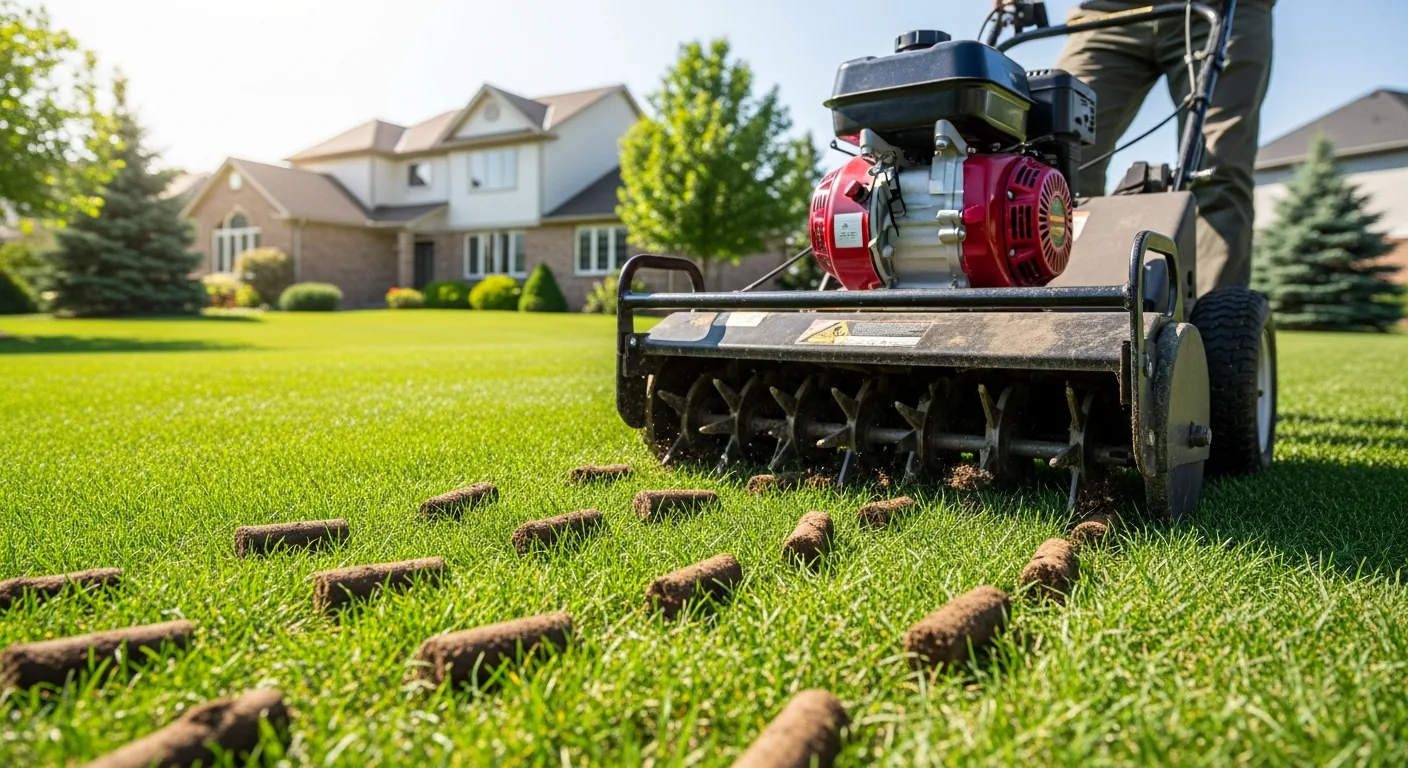
Core aeration leaves small soil plugs on the surface that break down naturally over 1–2 weeks, returning organic matter to the lawn while relieving compaction.
Why GTA Lawns Specifically Need Aeration
The Greater Toronto Area was built on glacial clay till deposited during the last ice age. This clay:
- Compacts aggressively under foot traffic — children, dogs, lawn furniture, even routine mowing
- Experiences severe freeze-thaw cycles each winter, creating a brick-hard surface layer by spring
- Drains poorly, causing puddles and water pooling after rain — then bakes dry in summer
- Builds up thatch (dead grass and organic debris) faster than loamy soils
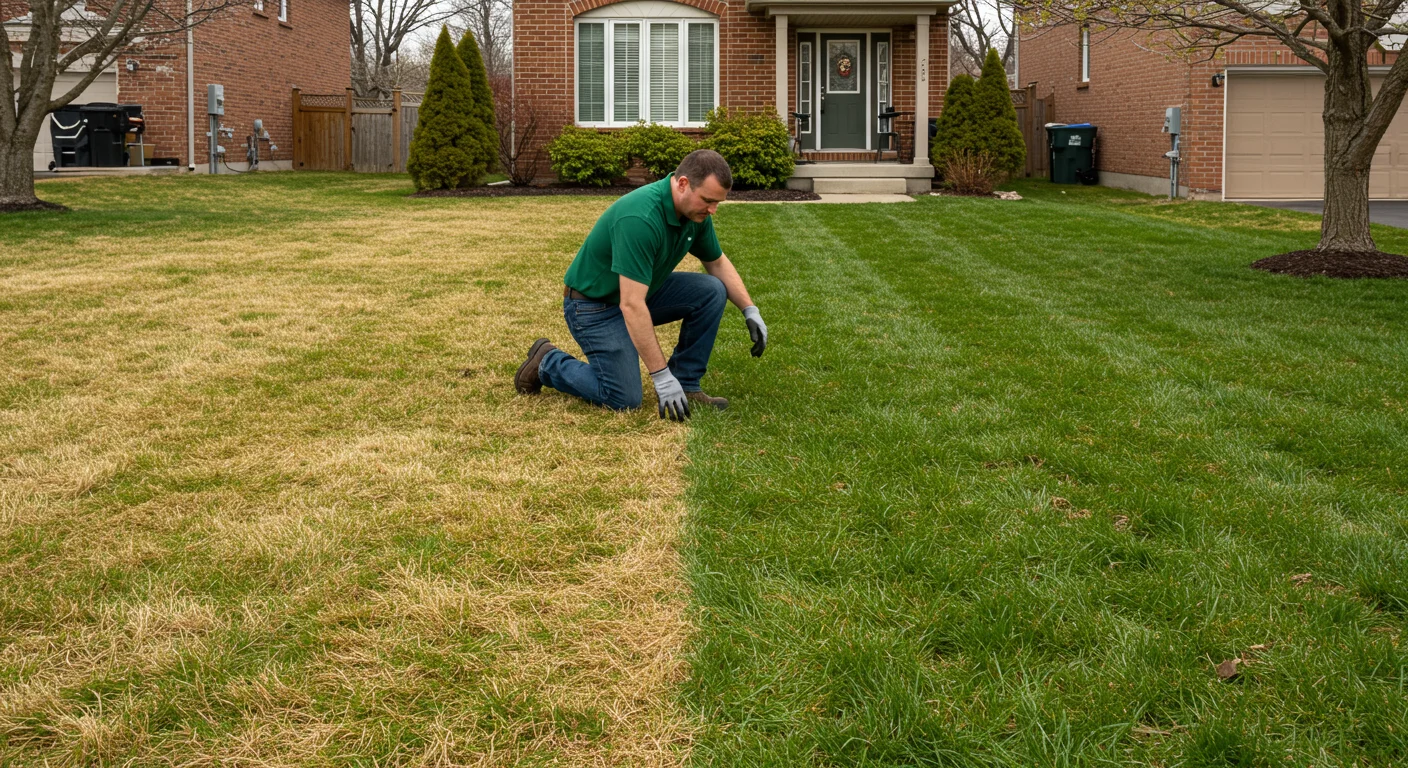
The result is a surface that physically blocks water and nutrients from reaching roots. Grass grows thin and pale, weed seeds fill in bare patches, and fertilizer washes off instead of absorbing. Aeration breaks this cycle permanently — not just for one season.
When Is the Best Time to Aerate in the GTA?
Fall: The Prime Window (Late August – October)
Fall is the ideal aeration window for GTA lawns — and by a significant margin. Here's why:
- Grass is actively growing — cool nights and warm soil temperatures (15–20°C) stimulate vigorous root development
- Weeds are dormant — annual weeds have finished their cycle, so aeration won't open up germination pockets for them
- Overseeding pairs perfectly — seeds dropped into aeration holes in fall germinate immediately and establish before the first frost
- Recovery is fast — grass fills in the holes and channels within 3–4 weeks before winter dormancy
In North York, Vaughan, and the broader GTA, the ideal fall aeration window is mid-August through late October, before soil temperatures drop below 10°C.
Spring: A Valid Secondary Window (Late April – May)
Spring aeration works — but comes with trade-offs. The compaction from winter and snowplowing is at its worst in April, making the need real. However:
- Spring weed seeds (crabgrass, dandelion) are actively germinating — aeration opens prime germination spots for them
- Soil is often still wet in April and early May — aerating wet clay causes smearing and equipment ruts
- Summer heat stress arrives quickly after spring aeration, reducing the recovery window
Spring aeration is best suited for severely compacted lawns that need immediate relief, or lawns undergoing renovation. If you have the choice, wait for fall.
GTA Aeration Timing Summary
Late August – October
Soil temp: 15–20°C
Ideal before overseeding
Late April – May
Avoid wet/frozen soil
Monitor for weed pressure
How Often Should You Aerate a GTA Lawn?
For most GTA residential properties with clay-heavy soil and typical use:
- Once per year (fall) — standard residential lawn in North York, Markham, or Vaughan
- Twice per year (spring + fall) — high-traffic lawns with dogs, children, or regular foot traffic; lawns with severe compaction from clay subsoil
- Every 2 years — rarely. Only suitable for loam or sandy soils, uncommon in the GTA
Should You Overseed After Aeration?
Yes — and the combination is one of the most effective lawn recovery treatments available. Here's why the pairing works so well:
Grass seed requires direct contact with soil to germinate. Spread on a compacted surface, most seeds dry out or wash away before they root. But when you overseed immediately after aeration, seeds fall directly into the 3-inch channels — protected from wind, birds, and drying — with full soil contact.
The germination rate for overseeded aeration holes is dramatically higher than broadcast seeding on an unaerated lawn. Trim Gym offers overseeding as an add-on to any aeration visit — typically at a significant discount vs. booking separately.
How to Prepare Your Lawn for Aeration
- Mow 2–3 days before at your normal cutting height. Don't scalp — standard height is fine.
- Water the evening before to soften the soil. Moist clay releases cleaner plugs and allows tines to penetrate deeper. Avoid soggy conditions.
- Mark sprinkler heads with small flags or paint before the crew arrives. This prevents damage and speeds up the service.
- Remove toys, furniture, and hoses from the lawn so we can cover every section without obstacles.
- Leave the plugs after the service. Do not rake them up. They dissolve and feed your lawn.
What to Do After Lawn Aeration
The 2–3 weeks following aeration are critical for recovery:
- Water deeply — 1 inch of water, 2–3 times per week for the first 3 weeks. This drives nutrients and oxygen down through the aeration channels.
- Fertilize within 48 hours — granular fertilizer applied immediately after aeration absorbs through the open channels rather than sitting on compacted soil. The timing makes it significantly more effective.
- Avoid heavy foot traffic for 2 weeks while channels are open and (if overseeded) seeds are germinating.
- Mow 10–14 days after — wait until the plugs are partially dissolved and any overseeded grass has reached 3–4 inches.
DIY vs. Professional Aeration in the GTA
Rental aerators are available at Home Depot and equipment rental shops throughout the GTA for approximately $100–$150 per day. On the surface this seems economical, but there are trade-offs:
DIY Rental
- $100–$150 rental + deposit ($150)
- Pickup/return time (1–2 hrs)
- Small walk-behind machines miss edges
- Physically demanding — 200+ lb machine
- Risk of damaging sprinkler heads
- Often not available on short notice in fall
Professional (Trim Gym)
- From $89 — small lots often cheaper than DIY
- Zero of your time spent on pickup/return
- Commercial 18–22″ machines, full coverage
- We flag sprinklers, handle obstacles
- Post-service watering guide included
- Book online — schedule guaranteed
For small lots specifically, professional aeration from Trim Gym often costs less than DIY once you factor in rental, deposit, and your time. For standard and large GTA lots, the time savings alone justify the modest premium.
How Much Does Lawn Aeration Cost in the GTA?
Most GTA lawn care companies charge $100–$175 for a small lot and $175–$250 for a standard suburban property. Larger operations like LawnSavers and Weed Man tend to price in the mid-to-upper range for equivalent service.
Trim Gym's aeration pricing is deliberately 10–15% below the GTA market average:
- Small lot (under 2,500 sq ft): $89 + HST
- Standard lot (2,500–5,000 sq ft): $135 + HST
- Large / corner lot (5,000+ sq ft): $179+ + HST
Book Your GTA Lawn Aeration
Fall slots fill fast in North York, Vaughan, Markham, Scarborough, and Richmond Hill. Don't wait until October.
Signs Your GTA Lawn Needs Aeration Now
- Puddles form after rain and take more than 30 minutes to drain
- Lawn feels spongy or bouncy underfoot (thick thatch layer)
- Grass looks thin, pale, or stressed despite regular fertilization
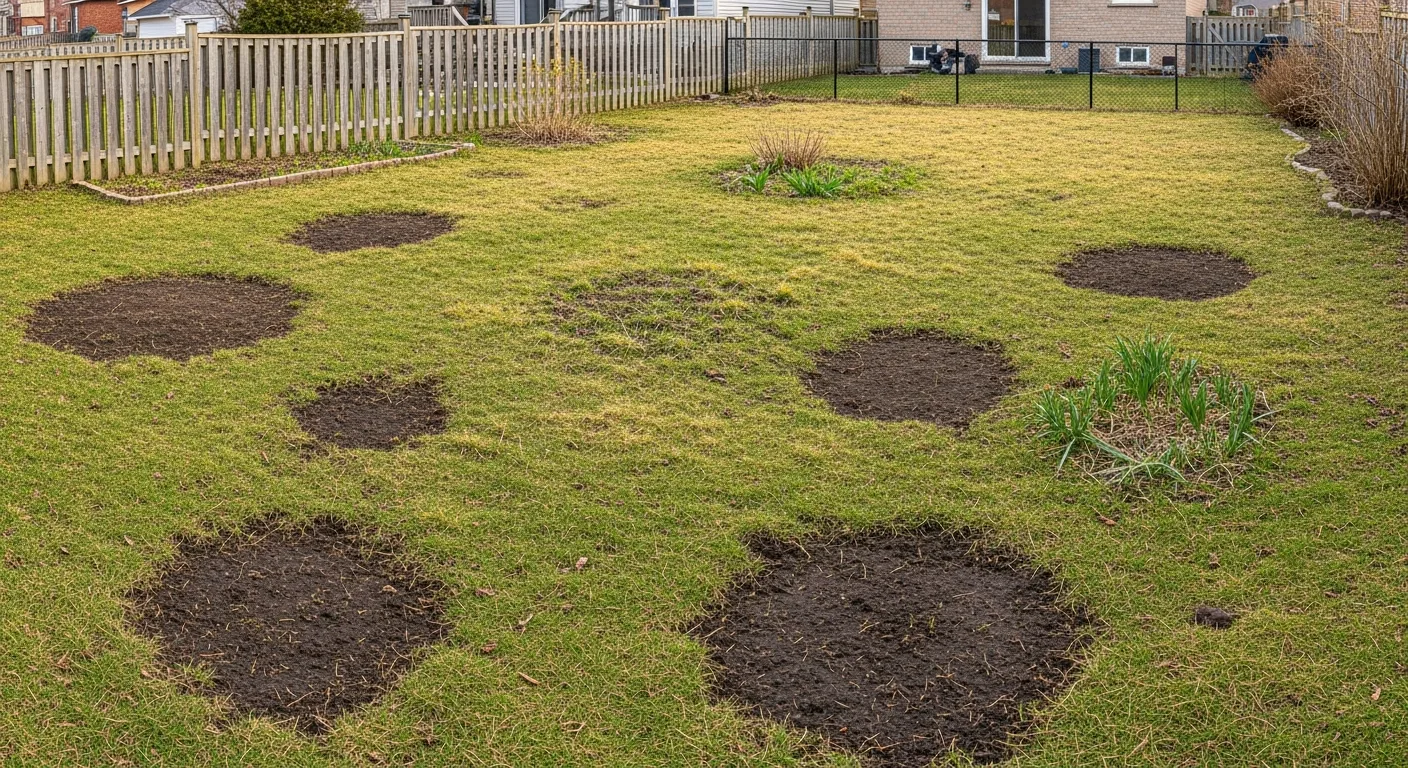
- Bare patches that don't fill in with overseeding
- The lawn hasn't been aerated in 2 or more years
- Heavy clay soil — common in North York, Vaughan, Scarborough, Markham, and Richmond Hill
- High traffic from children, dogs, or regular entertaining
Frequently Asked Questions
Can I fertilize right after aeration?
Yes — and you should. Fertilizer applied within 24–48 hours of aeration is significantly more effective because granules enter the channels directly rather than sitting on the surface. Use a slow-release granular fertilizer if doing it in fall.
How long until I see results after aeration?
Visible improvement varies: puddles drain faster within days, greener colour appears within 2 weeks, thicker growth takes 4–6 weeks. If you paired aeration with overseeding, new grass seedlings appear in 10–14 days.