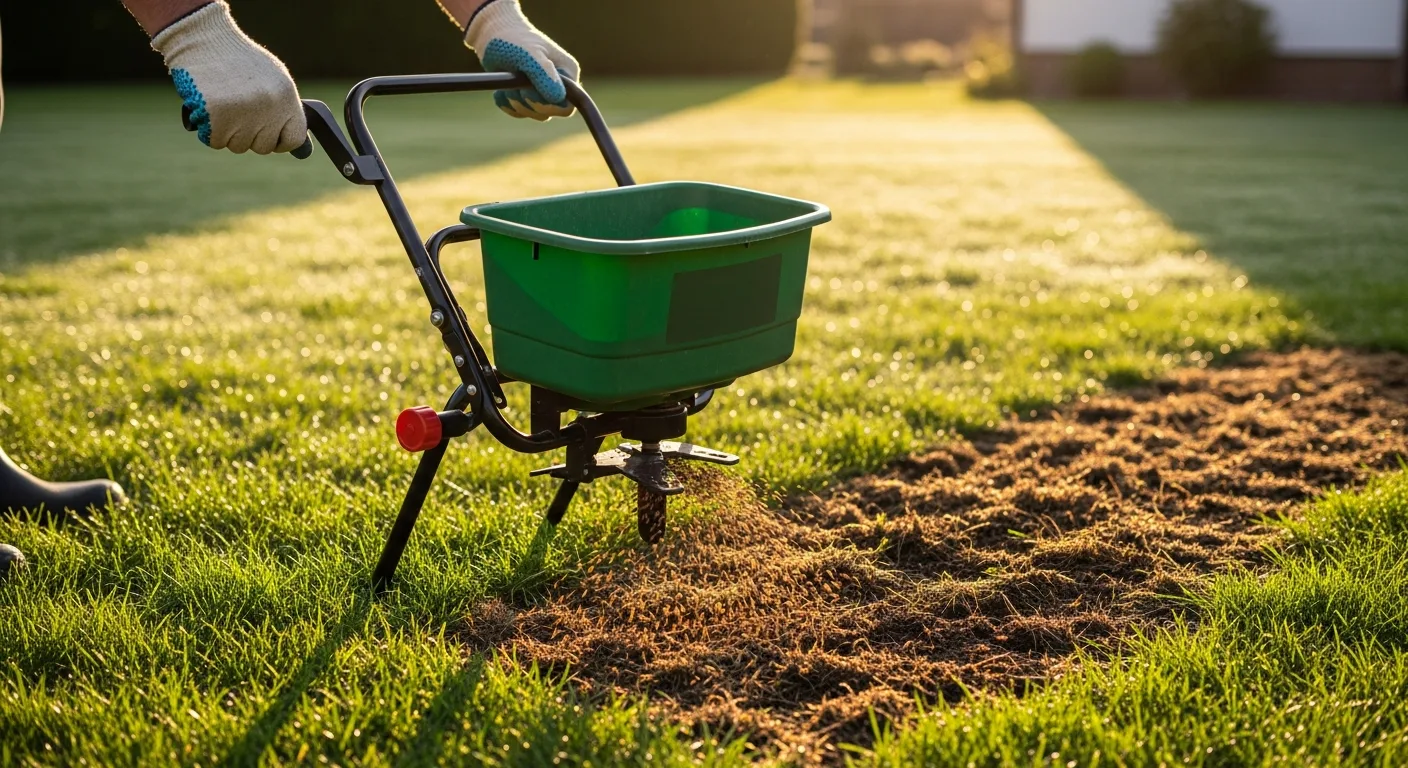
The best time to overseed a lawn in Ontario is August 15 to September 20. Soil temperatures sit at 13–18°C — the optimal germination range for Kentucky bluegrass and fescue. Warm days speed growth, cool nights reduce stress, and weed competition is at its annual low. Expected germination success: 85–95%. Spring overseeding (April 15 – May 15) is a fallback option with 50–70% success.
Why Late August Beats Spring for Overseeding in Ontario
Most homeowners assume spring is the right time to overseed because spring is when everything else grows. For grass seed in Ontario, late summer is dramatically better — and the gap isn't close.
By August 15, four conditions align that don't exist in spring:
- Soil temperature sits at 18–22°C — peak germination zone for cool-season grass.
- Air temperature drops at night — reducing seedling stress.
- Weed seeds have already germinated — your new grass faces almost no competition for light, water, or nutrients.
- Fall rain is reliable — Toronto averages 75mm of rain in September, exactly when seedlings need consistent moisture.
Spring overseeding faces the opposite conditions: cold soil, aggressive weed competition (especially crabgrass germinating at the same temperature), summer heat 8 weeks later, and the inability to apply pre-emergent weed control without killing your seed.

Perennial ryegrass germinates first (5–10 days). Kentucky bluegrass takes longer (14–21 days). A blended seed gives you fast cover plus long-term turf quality.
Ontario Overseeding Timing — Month by Month
| Window | Success Rate | Notes |
|---|---|---|
| Aug 15 – Sept 20 | 85–95% | Optimal — soil 13–18°C, low weed pressure, reliable rain |
| Sept 20 – Oct 10 | 60–80% | Workable — risk of cold snap before establishment |
| Oct 10 – Nov 15 | 10–30% (dormant) | Dormant seeding only — germinates next spring |
| April 15 – May 15 | 50–70% | Spring backup — heavy weed pressure, no pre-emergent |
| May 15 – Aug 14 | 10–40% | Avoid — heat stress kills seedlings before establishment |
The 5-Step Overseeding Process That Actually Works
Mow short and bag the clippings
Cut the lawn to 1.5 inches the day before seeding. Short grass + bagged clippings means seed reaches soil instead of sitting on grass blades.
Core aerate
Run a core aerator over the entire lawn — pull plugs 2–3 inches deep. The holes give seed direct soil contact and break compaction. See our aeration timing guide.
Topdress with screened topsoil (optional, recommended)
Spread a quarter-inch layer of clean screened topsoil or compost-soil blend. This holds seed in place and feeds new seedlings.
Apply seed at the right rate
Use a broadcast spreader at 3–4 lb per 1,000 sq ft for overseeding, or 6–8 lb for bare patch repair. Walk perpendicular passes to ensure even coverage.
Water lightly twice daily for 21 days
Mist 5–10 minutes twice a day to keep soil surface moist. Don't soak — washing seed away is the #1 cause of failed overseeding. After germination, transition to deep, infrequent watering.
Best Grass Seed Blends for Ontario Lawns
For most GTA residential lawns, a 3-way blend balances appearance, durability, and germination speed:
- Sun blend (40% KBG / 30% perennial rye / 30% tall fescue): Standard front and back lawns with 6+ hours of sun.
- Shade blend (20% KBG / 20% perennial rye / 60% fine fescue): North-facing lawns and areas under trees.
- High-traffic blend (30% KBG / 50% perennial rye / 20% tall fescue): Backyards with kids and pets.
- Grub-resistant blend (20% KBG / 20% perennial rye / 60% tall fescue): Recovery from European chafer damage.
The 3 Most Common Overseeding Mistakes
- Seeding too early in summer: July seeding fails 80% of the time because of heat stress before establishment.
- Skipping aeration: Seed sitting on top of compacted lawn doesn't make soil contact and washes away with the first rain.
- Applying weed-and-feed at the same time: Pre-emergent herbicides kill your new seed for 60–90 days. Wait until after the third mow.
Get Aeration + Overseeding Done Right
Trim Gym handles fall aeration and overseeding across the GTA — the right window, the right blend, and the right post-care so your new turf actually establishes. Combined with weekly mowing from $45/visit.
Frequently Asked Questions
Can I walk on a freshly overseeded lawn?
Avoid foot traffic for the first 21 days. Footsteps press seed too deep and damage emerging seedlings. After grass reaches 2 inches and you've mowed it once, normal use is fine.
When can I mow after overseeding?
First mow when new grass reaches 3 inches — typically 3 to 5 weeks after seeding. Use a sharp blade and remove no more than one-third of the blade height. Bag clippings for the first 2 mows so you don't smother young grass.
Do I need to fertilize after overseeding?
Yes — apply a starter fertilizer high in phosphorus (formulations like 10-20-10 or 18-24-12) at seeding to support root development. Apply a regular nitrogen fertilizer 6 weeks after germination once the new lawn is established.
Can I overseed if my lawn already looks pretty good?
Yes — annual overseeding is a maintenance practice, not just a repair tactic. Even healthy lawns lose 3–5% of grass plants per year to age, traffic, and stress. Adding fresh seed each fall keeps lawn density high and naturally crowds out weeds.