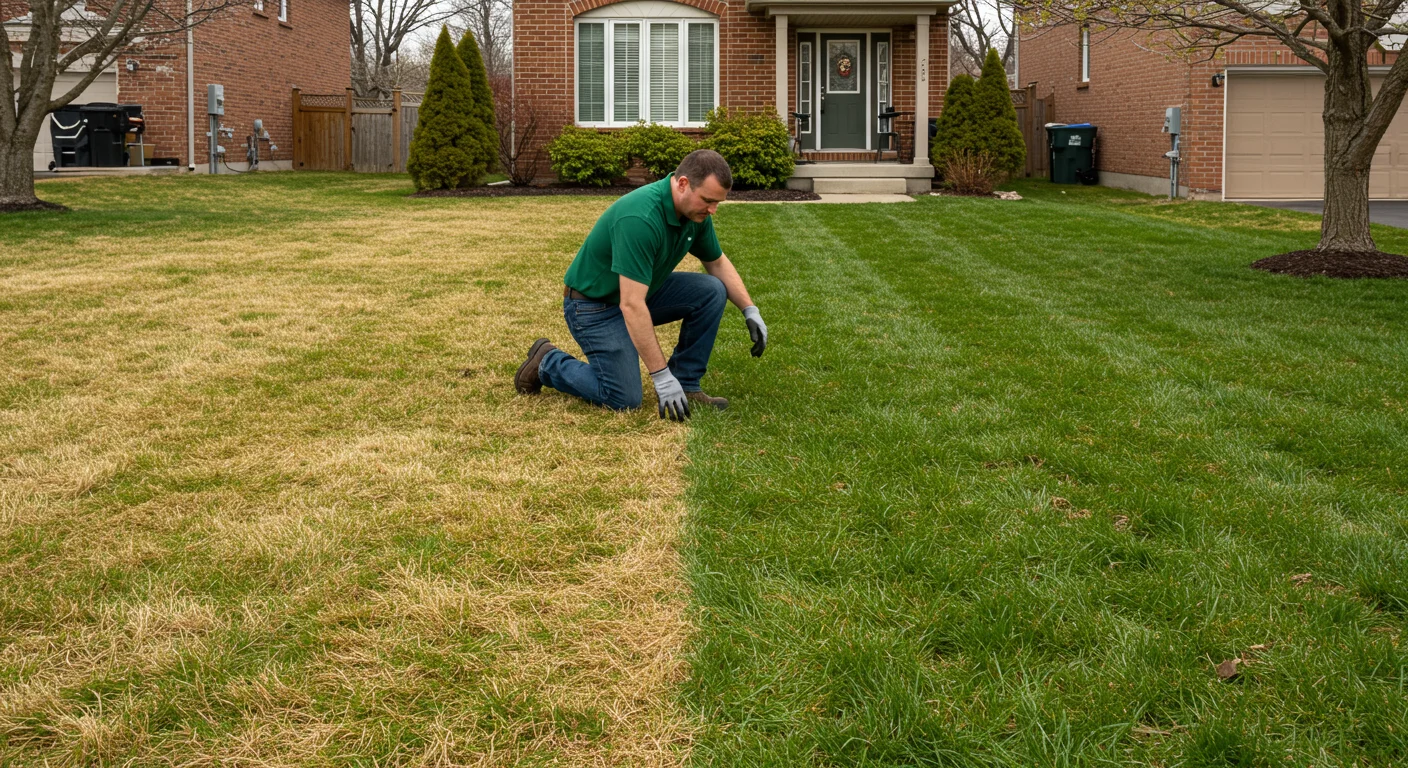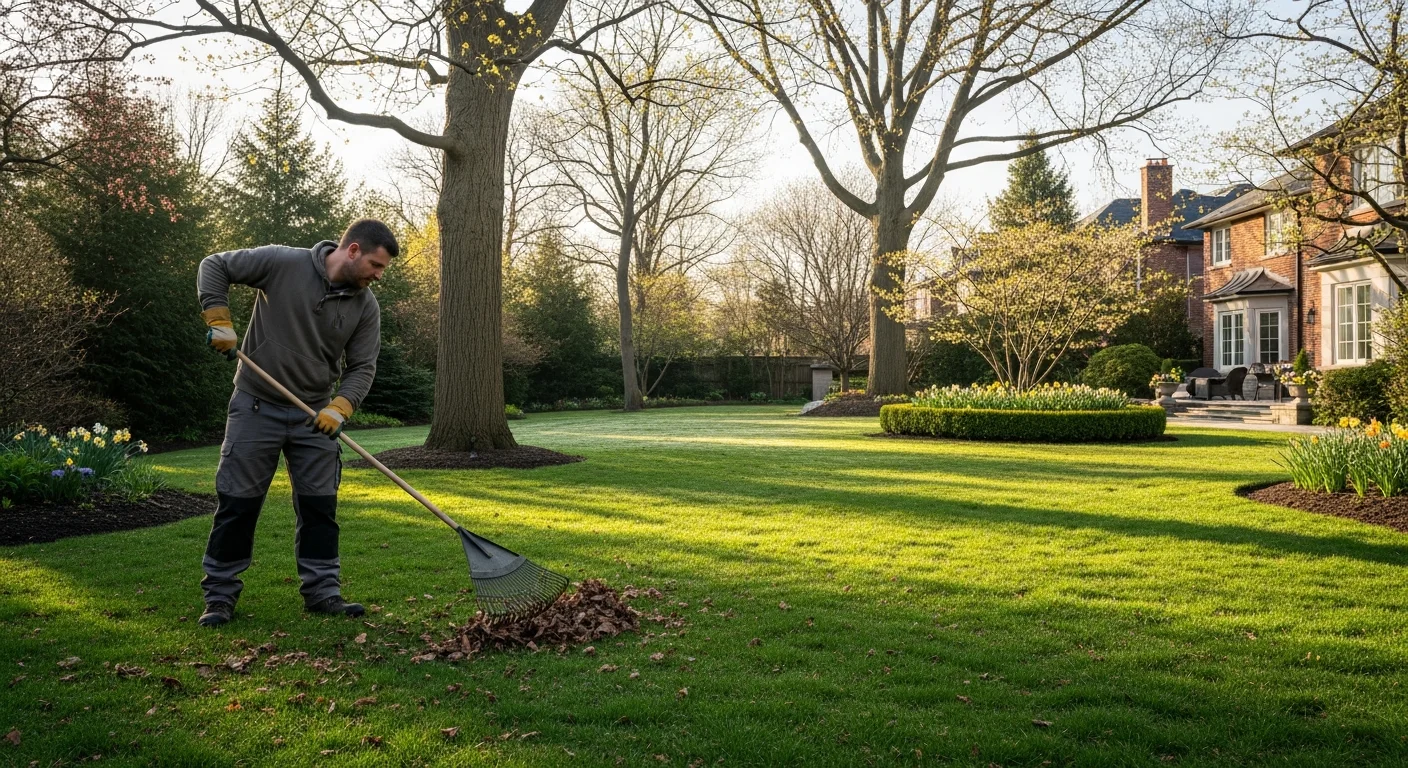
Spring lawn cleanup in the GTA should begin in late April when the ground has dried enough to walk on without leaving deep footprints. A complete cleanup includes clearing winter debris, raking and dethatching, cleaning garden beds, assessing winter damage, and completing the first fertilizer application — all done before the first mow of the season in mid-May.
Key Facts
- • A thorough spring cleanup takes the average GTA homeowner 4–8 hours for a standard residential property; professional crews complete the same scope in 2–3 hours using commercial equipment.
- • The City of Toronto requires all yard waste — including raked leaves and pruned plant material — to be placed in clear plastic bags or reusable containers at the curb for collection.
- • Dethatching is recommended when the thatch layer (dead grass between soil and live blades) exceeds ½ inch. Most GTA lawns benefit from at least one dethatching per year, typically in spring.
For homeowners in North York, Vaughan, Richmond Hill, Markham, and Scarborough, spring cleanup typically runs from late April to mid-May. Whether you tackle it yourself or hire a professional spring cleanup service, these are the essential steps.
When to Start Spring Cleanup in the GTA
Timing is crucial. Start too early and you'll damage wet soil; wait too long and you'll miss the window for optimal lawn preparation. Here's when to begin based on typical GTA conditions:
- Late April: Most years, this is when the ground has dried enough to begin work in North York and southern areas.
- Early May: Safer start time for Vaughan, Richmond Hill, and areas with heavier clay soil.
- Test First: Walk on your lawn. If it leaves deep footprints or feels spongy, wait another week.
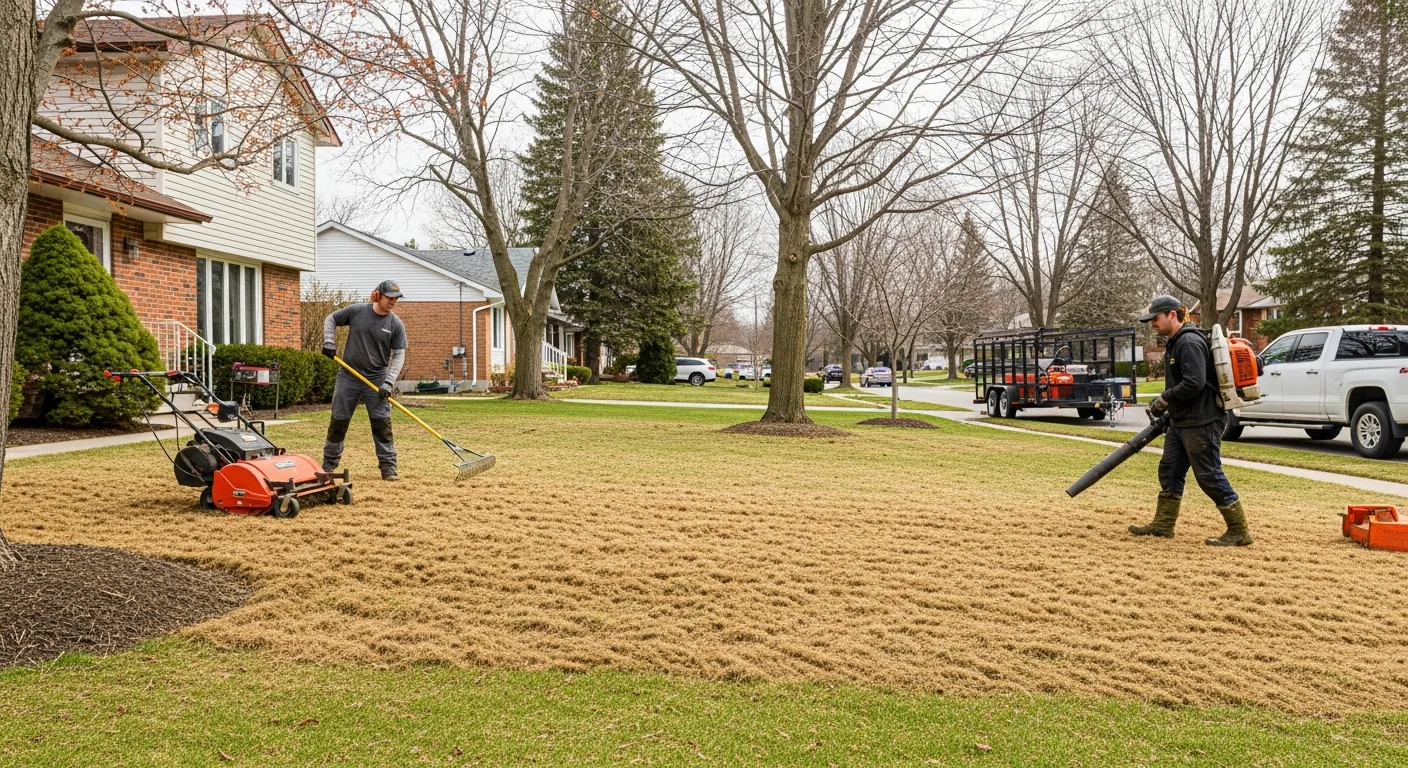
Thatch removal in early May reveals the true condition of the turf underneath — the essential first step before any spring fertilization or seeding.
The Complete Spring Cleanup Checklist
Step 1: Clear Winter Debris
Before any other work, remove everything that accumulated over winter:
- Rake up leaves, twigs, and dead plant material
- Remove any garbage or items blown onto your property
- Clear fallen branches from trees
- Remove any remaining snow mould (gray or pink patches)
Pro tip: Spring debris removal often reveals stumps from trees taken down before winter. A stump grinding service can remove them before the growing season so they don't interfere with mowing or new plantings.
Step 2: Rake and Dethatch
A thorough raking does more than remove debris—it also breaks up thatch (the layer of dead grass between the soil and live blades) and stimulates new growth:
- Use a spring-tine rake or power rake for best results
- Rake in multiple directions to lift matted grass
- If thatch is more than ½ inch thick, consider professional dethatching
- This step is especially important for Markham and Scarborough lawns with heavy clay soil
Step 3: Clean Up Garden Beds
Your garden beds need attention before new growth begins. If you're planning to add new plants or refresh mulch this spring, our planting and mulching service covers both. Remember to bag yard waste according to City of Toronto yard waste guidelines:
- Remove dead leaves and debris from beds
- Cut back dead perennials and ornamental grasses
- Edge beds for a clean, defined look
- Pull early weeds before they establish
Step 4: Assess Lawn Damage
Winter can be hard on GTA lawns. Look for these common issues:
- Snow mould: Gray or pink fuzzy patches; rake to break up and improve air circulation
- Salt damage: Dead patches near sidewalks and driveways; flush with water
- Bare spots: May need overseeding or sod patching
- Vole damage: Surface tunnels in the grass; rake and overseed
Step 5: First Fertilizer Application
Once the ground has warmed up (typically late April or early May in the GTA), apply your first fertilizer application. Use a slow-release nitrogen fertilizer to promote strong root growth and green-up.
Step 6: First Mow of the Season
Once grass is actively growing (usually mid-May in the GTA), it's time for your first mow:
- Set mower to 2.5 inches for the first cut
- Make sure blades are sharp (dull blades tear grass)
- Begin your regular weekly mowing schedule
Skip the Hard Work—Let Us Handle Your Spring Cleanup
Our professional spring cleanup service covers everything on this list. Pricing starts at $149 for small properties in North York, Vaughan, Richmond Hill, Markham, and Scarborough.
Spring Cleanup Timeline Summary
| When | What to Do |
|---|---|
| Late April | Clear debris, rake lawn, clean beds |
| Early May | Dethatch, edge beds, assess damage |
| Mid-May | First fertilizer, first mow, begin weekly service |
DIY vs. Professional Spring Cleanup: Which Is Worth It?
Spring cleanup is one of the most labor-intensive lawn care tasks of the year. For a typical property in the GTA, expect to spend 4–8 hours on a thorough cleanup. If you'd rather spend that time with family or simply don't have the equipment, professional service is a smart investment.
At Trim Gym Lawn Care, our spring cleanup service includes everything listed above: debris removal, raking, dethatching, bed cleanup, edging, and a final blow-down of all hard surfaces. We serve North York, Vaughan, Richmond Hill, Markham, and Scarborough.
Frequently Asked Questions
When should I do spring lawn cleanup in Toronto?
Spring lawn cleanup in the Greater Toronto Area typically begins in late April when ground conditions allow. Test readiness by walking on the lawn — if it leaves deep footprints or feels spongy, wait another week. Most GTA homeowners complete their full cleanup between late April and mid-May, with southern areas (North York, Scarborough) starting slightly earlier than Vaughan and Richmond Hill.
What is included in a spring lawn cleanup?
A complete spring lawn cleanup includes: clearing winter debris (leaves, twigs, branches), raking and dethatching the lawn, cleaning garden beds (removing dead leaves, cutting back perennials, edging), assessing winter damage (snow mould, salt damage, bare patches), applying the first fertilizer of the season, and completing the first mow once grass is actively growing.
How long does a spring lawn cleanup take?
For a typical residential property in North York, Vaughan, Richmond Hill, Markham, or Scarborough, expect 4–8 hours for a thorough DIY spring cleanup. Professional crews with commercial equipment complete the same scope in 2–3 hours. Properties with extensive gardens or heavy leaf accumulation take longer regardless of method.
What is snow mould and how do I treat it?
Snow mould is a fungal disease that appears as gray or pink circular patches on the lawn after snow melts. Treatment is straightforward: rake the affected areas firmly to break up the matted grass and improve air circulation. Most snow mould patches recover within 2–4 weeks once the grass dries and begins actively growing.
Is spring cleanup necessary if I did a thorough fall cleanup?
Yes. Even after a thorough fall cleanup, spring cleanup remains necessary. Ontario winters add new debris (branches, blown-in leaves, salt residue), cause snow mould, and compact soil under heavy snow loads. Spring cleanup also inspects for winter damage and prepares the lawn for its first fertilizer and first mow of the season.