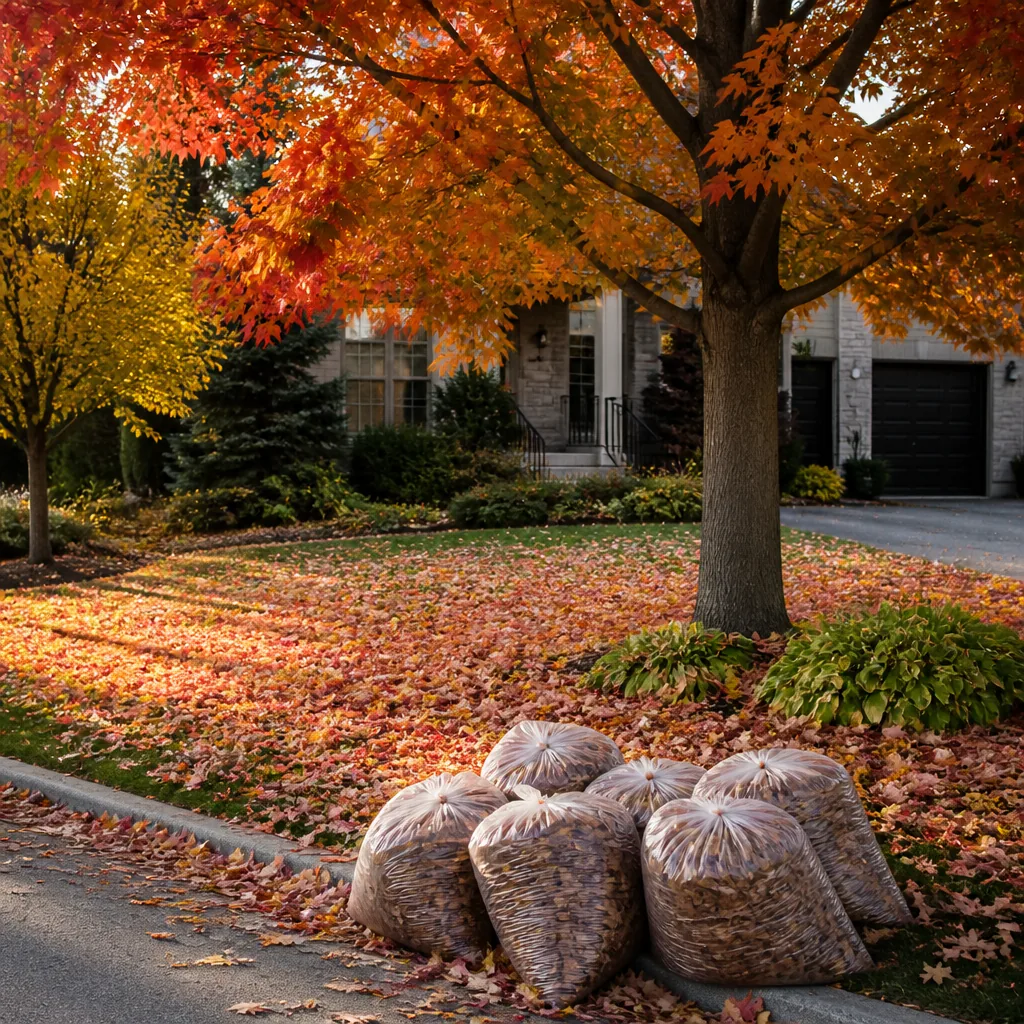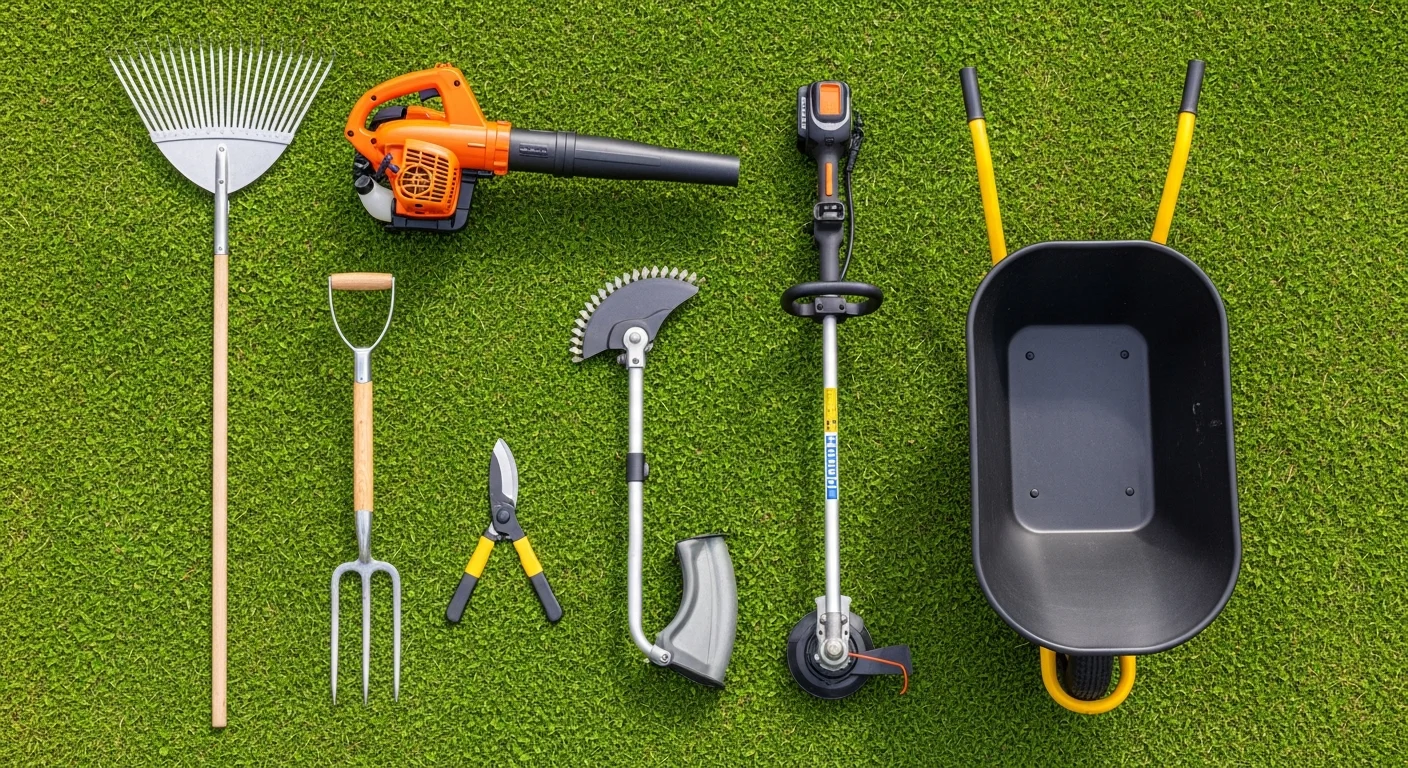
A professional spring cleanup uses 10 essential tools, from high-impact machinery like core aerators and power rakes to precision tools like rotary edgers and hand pruners. Knowing which to rent, which to buy, and which to leave to the pros ensures your GTA lawn gets exactly what it needs to recover from winter.
Most homeowners grab a rake and call it a spring cleanup. Professional crews show up with ten different tools — each one serving a purpose the others can't replicate. Here's exactly what's in the truck and why every piece matters.
Whether you're planning to hire a spring cleanup crew or tackle it yourself, knowing what each tool does helps you understand what you're getting — or what you might be skipping.
10 Spring Cleanup Tools at a Glance
Leaf Rake (Garden Rake)
Professional Tip
"Use a wide fan rake (24–30 inches) on open lawn areas and a narrow 12-inch rake for tight garden bed corners."
Difficulty
Beginner
Rental Needed?
No
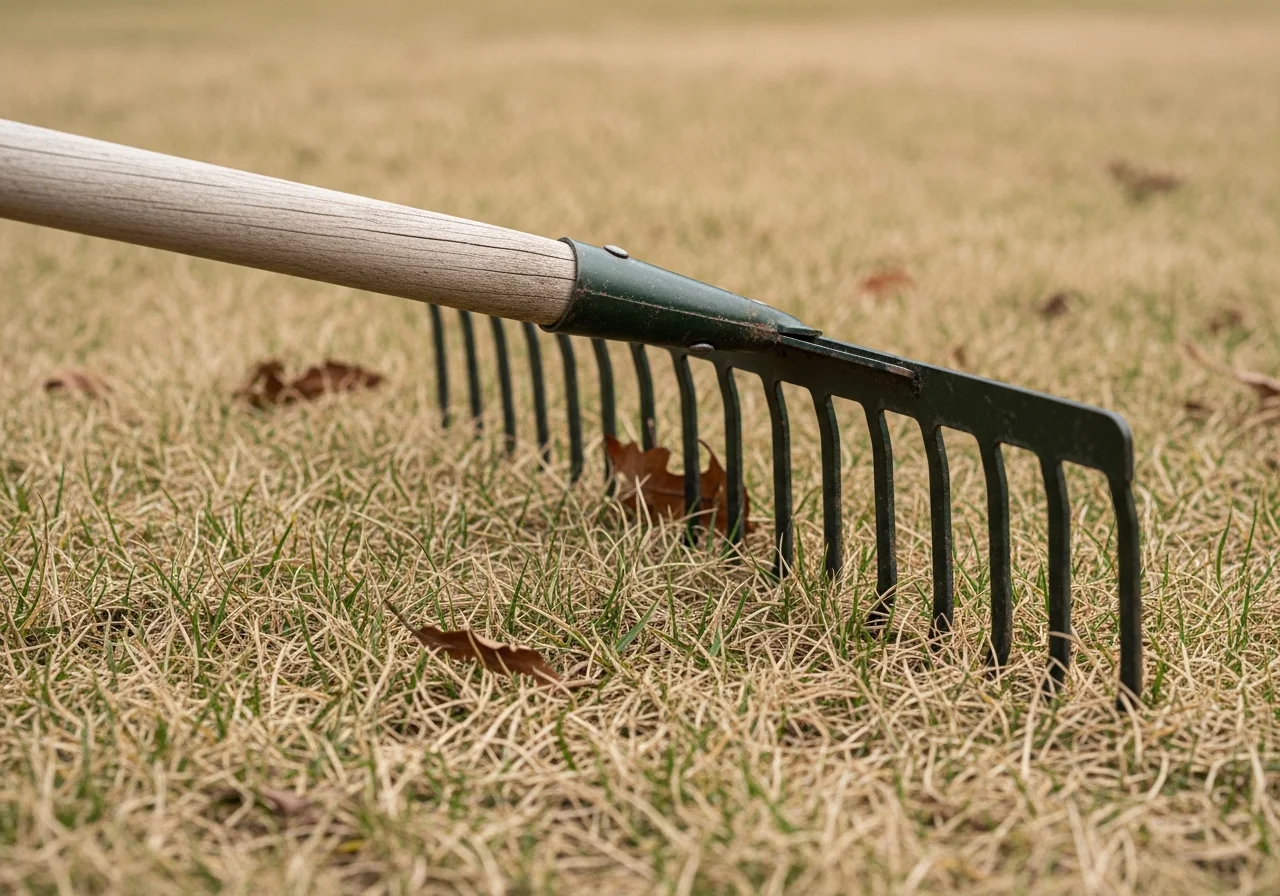
The most fundamental spring cleanup tool. A good leaf rake collects matted leaves, dead grass blades, twigs, acorns, and winter debris that smother new spring growth if left in place. Fan rakes with flexible tines are preferred for lawn work — they pick up debris without tearing live grass.
Why It Matters for Spring Cleanup:
Debris left on the lawn into May blocks sunlight and air circulation, creating the damp, low-oxygen conditions that snow mould and fungal diseases thrive in. Early raking in late April also reveals bare patches, frost-heaved sections, and snow mould you wouldn't otherwise notice until it's too late to treat.
GTA-Specific Note:
In North York and Vaughan where mature trees drop dense oak and maple leaf loads, expect to fill multiple bags. Scarborough properties near the Bluffs accumulate windblown debris that can mat particularly thick under evergreens.
Power Rake (Dethatcher)
Professional Tip
"Set tine depth to just scratch the thatch layer — aggressive settings on thin or new sod can tear the turf. Test on a small patch first."
Difficulty
Intermediate
Rental Needed?
Yes
Avg. Rental Cost
~$80–$120/day at Home Depot or equipment rental shops
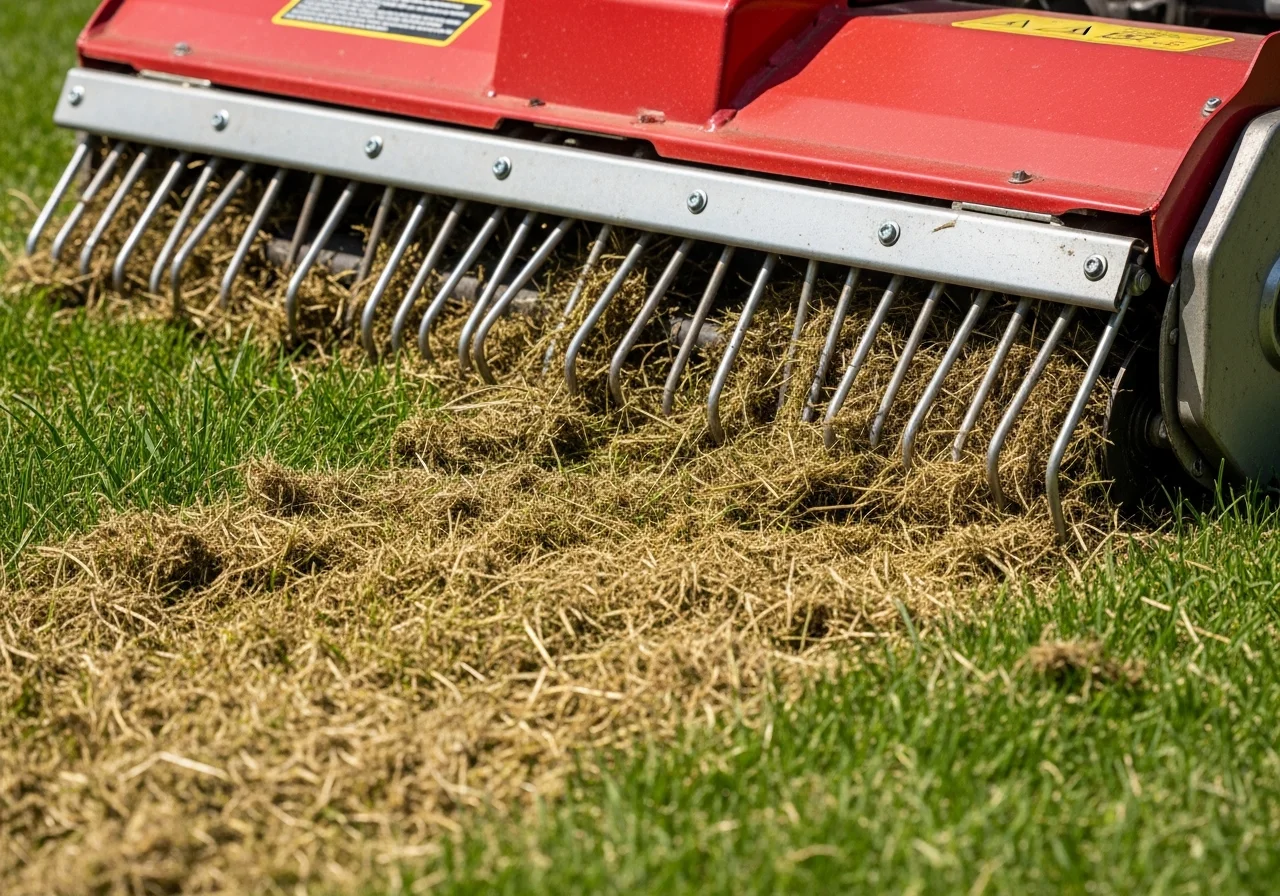
A power rake (also called a dethatcher or scarifier) uses spinning metal tines to mechanically rip out the layer of dead organic matter — called thatch — that accumulates between the soil surface and live grass. Thatch thicker than ½ inch blocks water, fertilizer, and air from reaching roots.
Why It Matters for Spring Cleanup:
GTA lawns dominated by Kentucky Bluegrass (the most common grass seed in the region) produce thatch faster than fescue or ryegrass blends. Annual dethatching in spring — before the growing season begins — allows fertilizer to penetrate the soil directly rather than sitting on top of the thatch layer. According to the University of Guelph Turfgrass Institute, the yield on a post-cleanup fertilization roughly doubles when thatch is managed below the ½-inch threshold.
GTA-Specific Note:
Do not power rake lawns installed within the last 2 years. New sod in areas like Cornell (Markham) or newer Vaughan subdivisions hasn't fully rooted — aggressive tines will pull up sections. Test for thatch: push a pencil into the lawn. If you feel spongy resistance before hitting soil, you have thatch to remove.
Core Aerator
Professional Tip
"Aerate when the soil is moist but not waterlogged — the hollow tines pull full plugs from wet soil, and broken tines are wasted passes on dry, compacted ground."
Difficulty
Intermediate
Rental Needed?
Yes
Avg. Rental Cost
~$70–$100/day at Home Depot or equipment rental
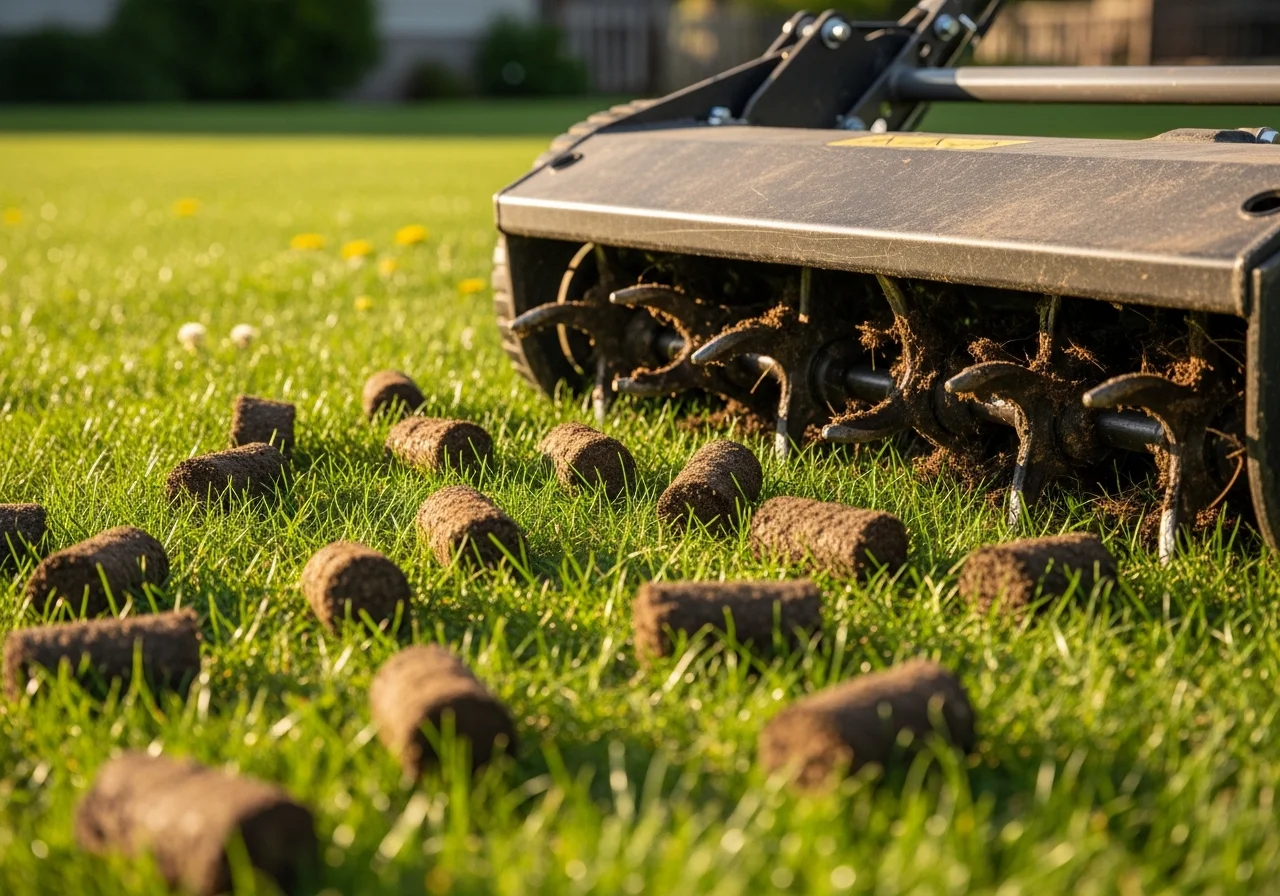
A core aerator uses hollow metal tines to punch cylindrical plugs (cores) out of the soil at regular intervals — typically every 3–4 inches. This physical process relieves soil compaction, improves drainage, opens channels for oxygen and nutrients to reach root zones, and creates ideal seed-to-soil contact for overseeding.
Why It Matters for Spring Cleanup:
Clay soil — which covers most of North York, Vaughan, and Markham — compacts severely over winter from freeze-thaw cycles, foot traffic, and snowplow pressure. Compacted soil forces grass roots to grow sideways instead of down, producing thin turf that browns out in August heat. Annual aeration is the single highest-impact maintenance task on heavy clay GTA lawns.
GTA-Specific Note:
Sandy loam in Oak Ridges (Richmond Hill) compacts less and may only need aeration every other year. Always flag sprinkler heads before aerating — tines will shear them off. Aeration plugs left on the surface break down naturally in 2–3 weeks; don't rake them up.
String Trimmer (Weed Eater)
Professional Tip
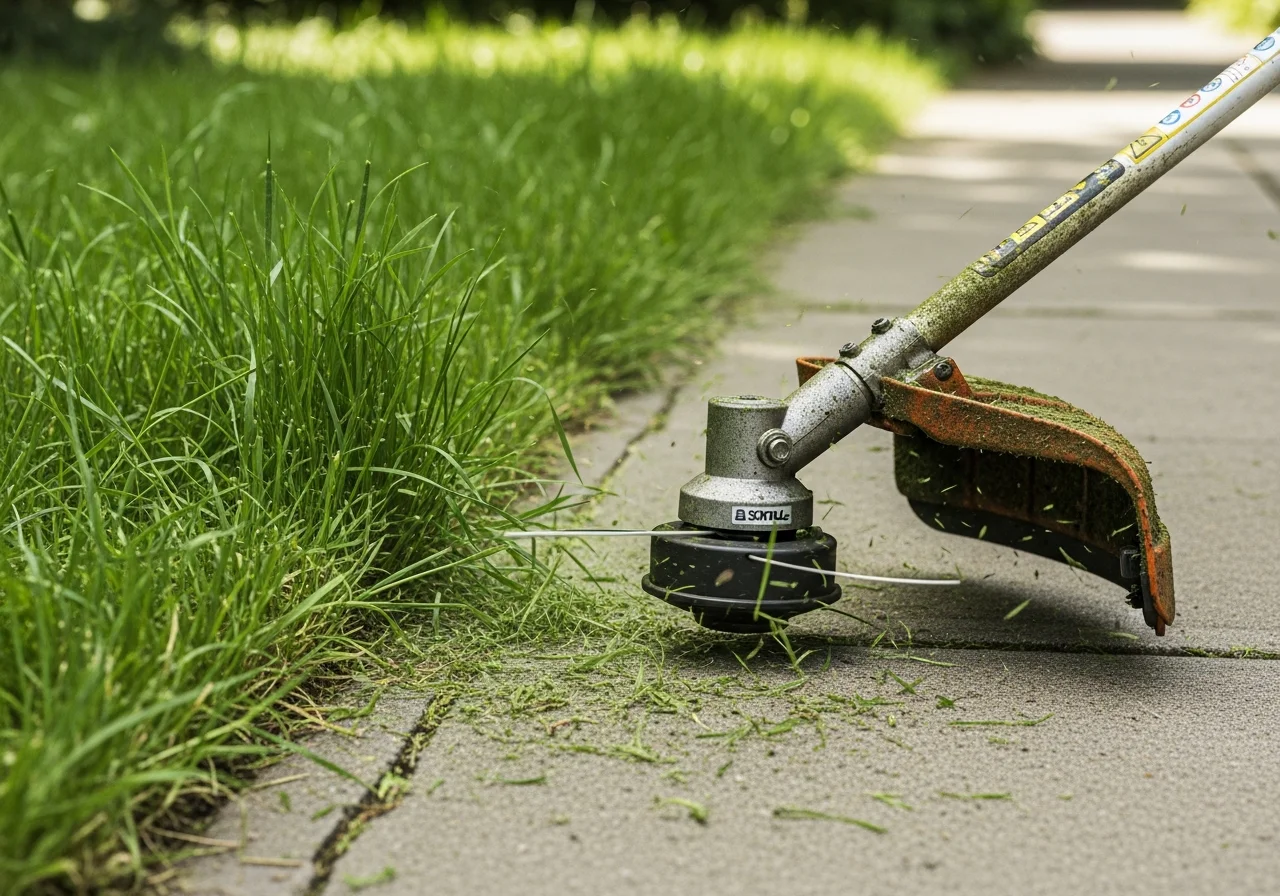
"Hold the trimmer head parallel to the ground for area trimming, then tilt it 90° for edging along hard surfaces — this is the difference between a jagged cut and a pro-looking edge."
Difficulty
Beginner
Rental Needed?
No
A string trimmer (called a weed eater or weed whacker colloquially) uses a rapidly spinning monofilament line to cut grass and light vegetation in areas a mower can't reach — along fence lines, around tree bases, under decks, and against walls. In spring cleanup, it's used to cut back overgrown edges before the edger creates the final defined line.
Why It Matters for Spring Cleanup:
Areas that a mower deck skips all winter look overgrown and ragged by spring. A single pass with a string trimmer — properly angled — brings those zones back in line with the mowed lawn. Without it, grass encroaches into beds and along hardscaping, making edges impossible to define cleanly.
GTA-Specific Note:
Gas-powered trimmers handle heavy spring overgrowth better than battery units in cold spring air. Battery-powered models from Greenworks or EGO are adequate for maintenance trimming but lose power cutting through thick, wet spring grass. For a 50×120 ft lot, expect 15–20 minutes of trimming time.
Rotary Lawn Edger
Professional Tip
"Edge beds and driveways before mowing, not after — the mower catches loose soil and thatch kicked out by the edger."
Difficulty
Intermediate
Rental Needed?
No
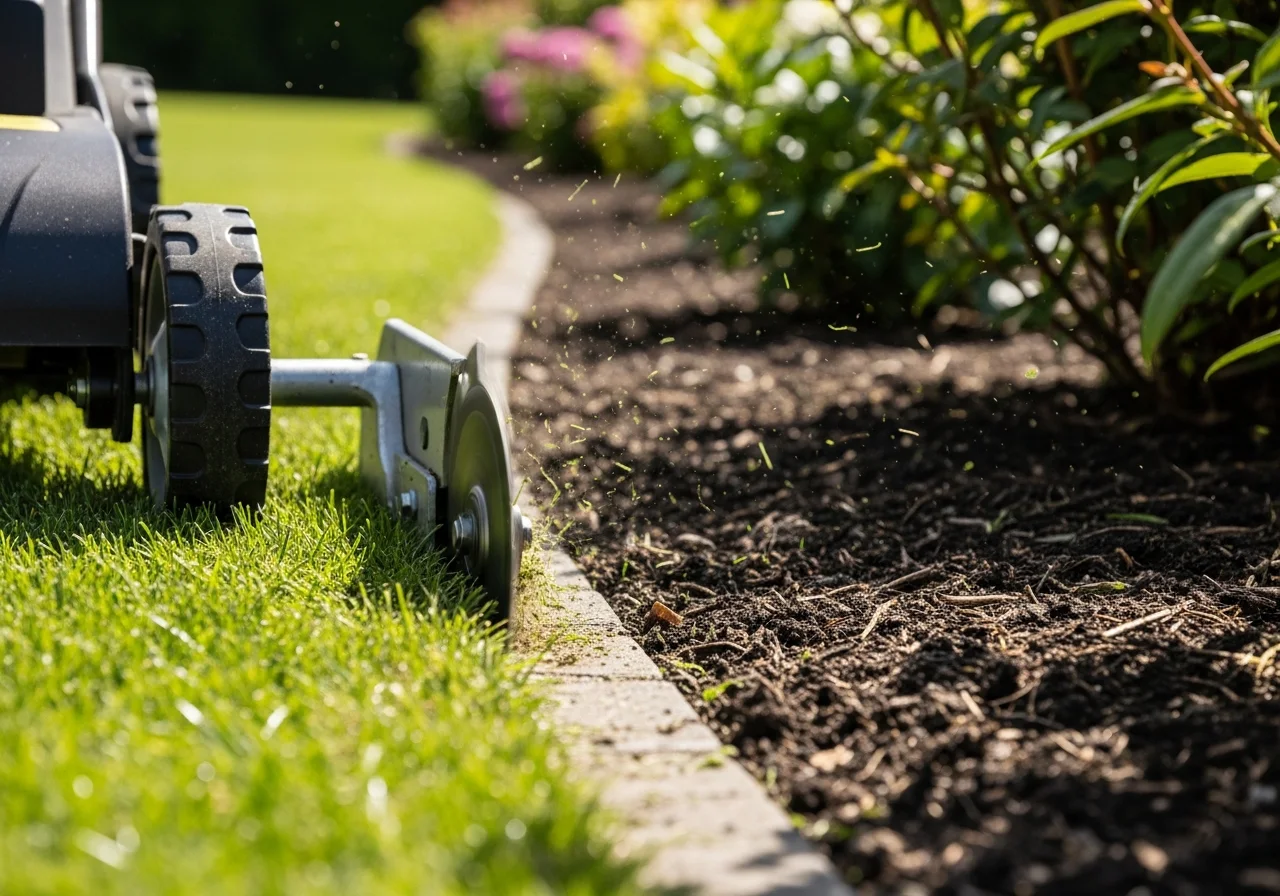
A rotary edger uses a spinning steel blade to cut a clean, vertical line between the lawn and an adjacent hard surface (driveway, walkway, patio) or garden bed. The result — when done correctly — is a perfectly straight, sharp border that makes the entire property look instantly more manicured.
Why It Matters for Spring Cleanup:
Turf naturally creeps into beds and over hard surfaces over winter. By spring, many GTA lawns have 1–3 inches of grass growing sideways over the bed border or concrete edge. A string trimmer can maintain an existing edge but cannot re-create a lost one. Only an edger restores the crisp line. This single step accounts for roughly half of the visual improvement most homeowners see after a spring cleanup.
GTA-Specific Note:
On properties with interlock or flagstone — common in Vaughan and Richmond Hill — use a manual half-moon spade edger near the stone itself. Rotary blades can chip natural stone and scratch interlock. Along concrete curbs and poured driveways, the rotary edger is the right tool.
Leaf Blower
Professional Tip
"Use the vacuum/mulch setting on accumulated piles before blowing — it reduces volume by 10:1, saving bag space. Blow debris toward the centre of the lot to avoid scattering it back onto beds."
Difficulty
Beginner
Rental Needed?
No
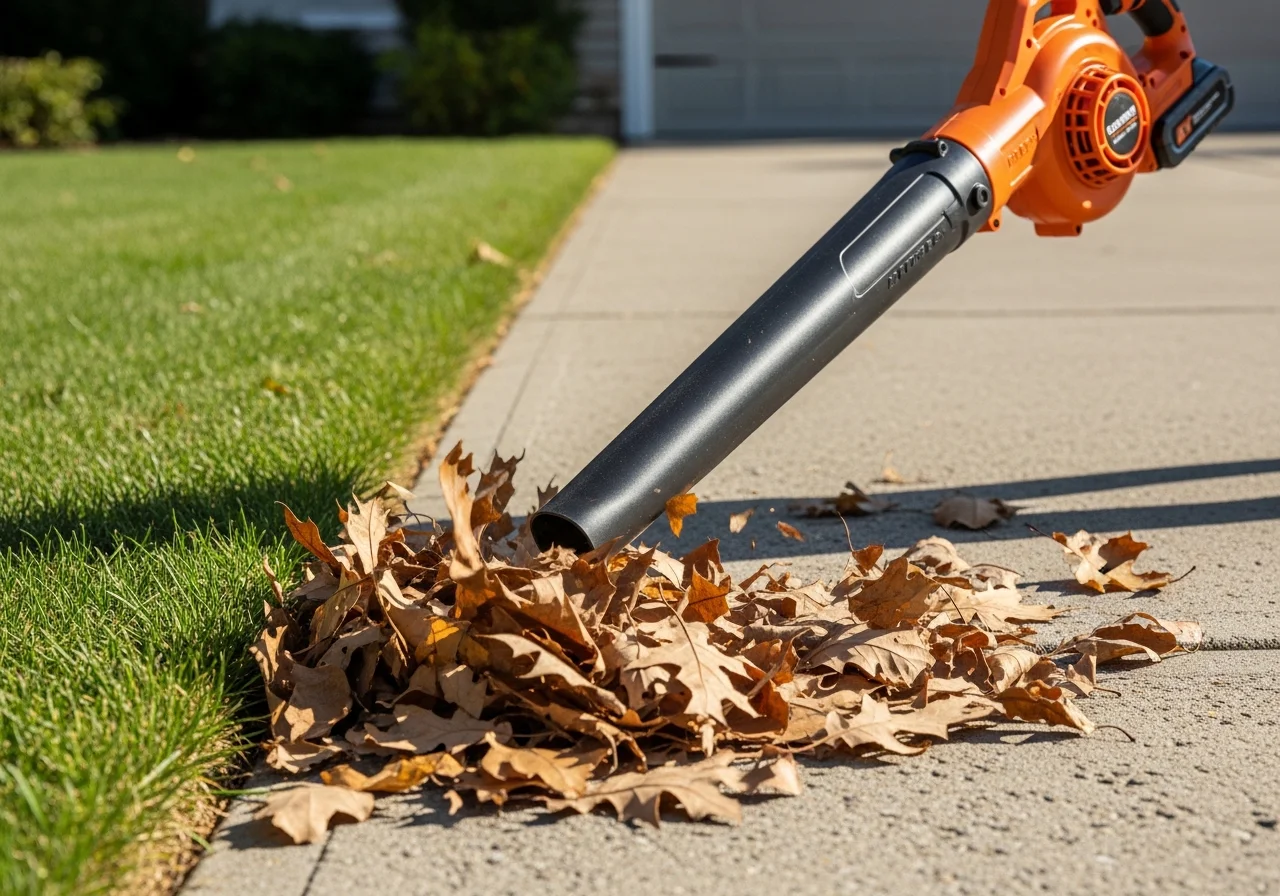
Leaf blowers use a high-velocity air stream to move leaves, grass clippings, fine debris, and winter sand off driveways, walkways, patios, and hardscaping. During spring cleanup they're used after raking to clear driveway cracks and patio joints where rakes can't reach, and after mowing to blow clippings off hard surfaces.
Why It Matters for Spring Cleanup:
Leaving winter grit, sand, and leaf debris on interlocks and driveways stains the surface and, when it washes into lawn edges with the first spring rain, can suffocate turf. Blower clearance is also the finishing step that makes a property look done — not just cleaned.
GTA-Specific Note:
Many GTA municipalities have noise bylaws restricting blower use before 8am or on Sundays. Gas blowers are significantly louder than battery units. Toronto's <a href='https://www.toronto.ca/city-government/public-notices-bylaws/bylaw-enforcement/noise/' target='_blank' rel='noopener noreferrer' class='text-primary hover:underline'>Noise By-law</a> restricts power equipment to 7am–11pm on weekdays. For street-side use in neighbourhoods like Willowdale (North York) or Old Markham Village, a battery-powered unit keeps you compliant and neighbourly.
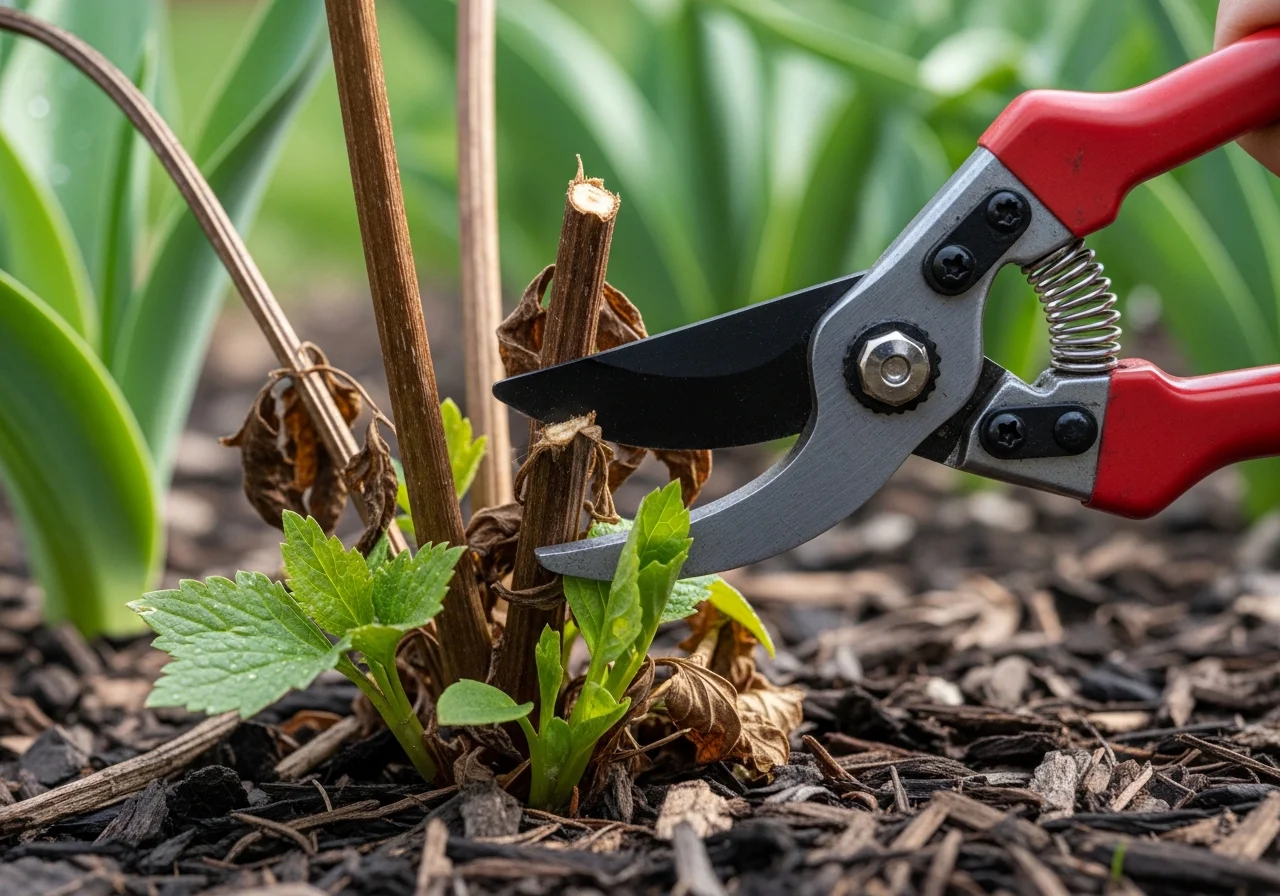
Pruning Shears (Hand Pruners)
Professional Tip
"Bypass pruners (scissor-action) make cleaner cuts on live stems than anvil pruners. Wipe blades with rubbing alcohol between plants to avoid spreading disease."
Difficulty
Beginner
Rental Needed?
No
Bypass pruning shears are hand-held cutting tools used to cut back dead perennials to soil level, remove winter-killed shrub tips, deadhead ornamental grasses, and clear plant material too thick for a string trimmer but too light for loppers. Spring cleanup without shears leaves beds with dead stalks sticking up through new growth.
Why It Matters for Spring Cleanup:
Perennials like hostas, coneflowers, salvia, and ornamental grasses die back to the ground every fall and must be cut back in spring before new growth emerges — otherwise new shoots grow through dead stalks, trapping moisture and disease. Cutting too late after new growth starts damages emerging shoots.
GTA-Specific Note:
Older Richmond Hill and North York properties with established perennial borders often require 30–60 minutes of pruning work alone. Plan for it, or specify it when booking a professional cleanup — it's a separate task from lawn dethatching and often priced additionally for large gardens. If you have extensive garden beds to maintain all season, our <a href='/garden-maintenance-services' class='text-primary hover:underline font-medium'>garden maintenance service</a> handles ongoing pruning, edging, and bed care.
Garden Fork (Digging Fork)

Professional Tip
"Push the fork in vertically (not at an angle) and wiggle it gently before lifting — this loosens soil without breaking structure or slicing through bulbs."
Difficulty
Beginner
Rental Needed?
No
A digging fork uses four thick tines to manually loosen compacted soil in garden beds, turn over mulch and winter amendments, and aerate bed soil without fully disturbing plant root zones. It's also used to remove large roots and weeds during spring bed cleanup.
Why It Matters for Spring Cleanup:
Garden beds compact over winter just like lawns. Loose, aerated soil in spring allows water to penetrate to root zones and creates the conditions perennials and annuals need to establish quickly. A pass with a garden fork through each bed before adding fresh mulch can visibly improve plant performance all season.
GTA-Specific Note:
GTA's clay soil compacts hard over winter. In Scarborough and North York especially, using a fork to break up the top 6 inches of bed soil before adding spring compost or mulch is the difference between beds that thrive and beds that grow slowly until July.
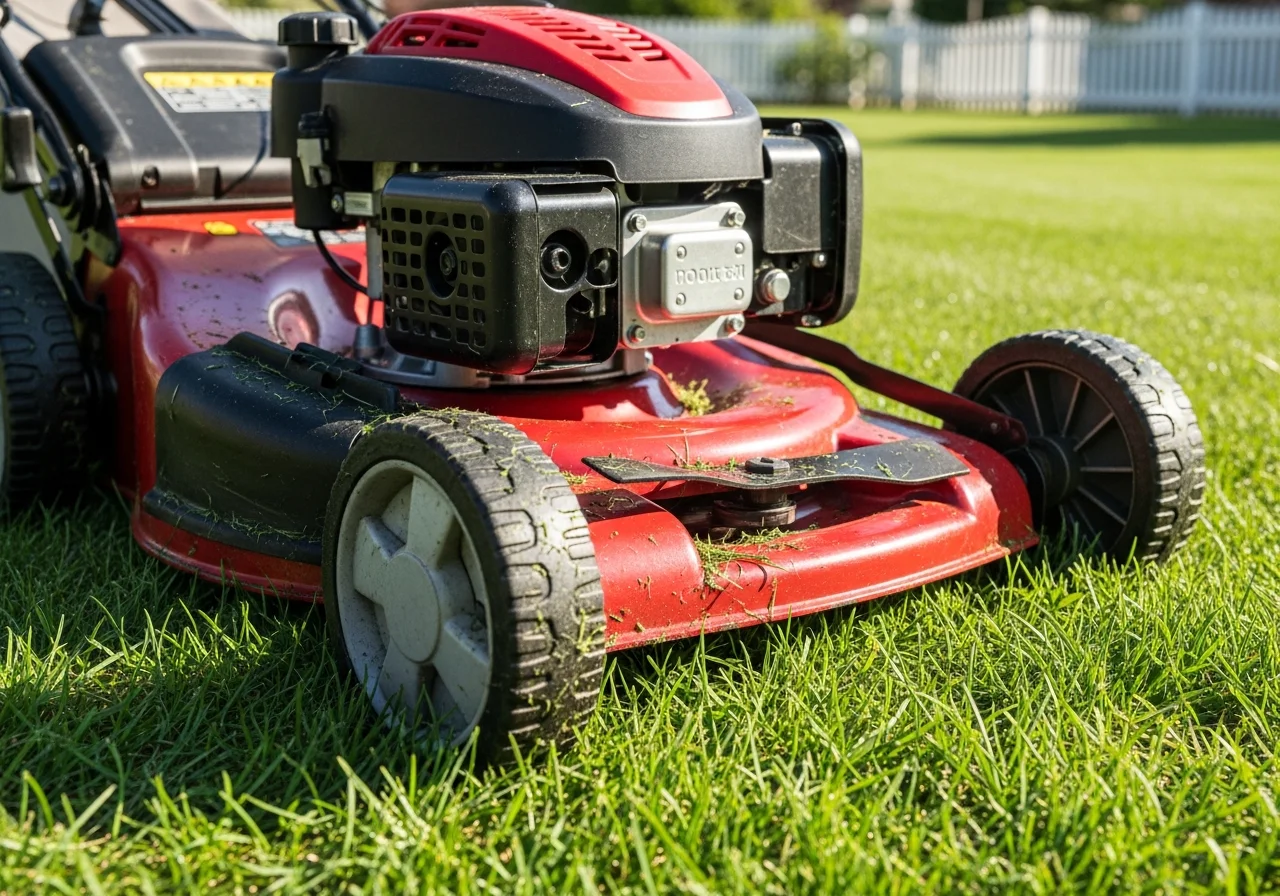
Walk-Behind Push Mower
Professional Tip
"The first mow of spring should be the highest setting on your mower — typically 3 to 3.5 inches. Never cut more than one-third of the blade height at once, especially on dormant spring grass."
Difficulty
Beginner
Rental Needed?
No
The walk-behind push mower is the workhorse of the spring cleanup finish. After raking, dethatching, and edging, the first mow sets the season's tone. Properly timed and set at the correct height, the first mow stimulates lateral growth, encourages root development, and removes the top layer of discoloured winter blades to reveal the emerging green.
Why It Matters for Spring Cleanup:
Mowing too early (soil still wet or frozen) compacts the turf. Mowing too low scalps the lawn, stressing the grass at exactly the time it needs energy to recover from winter. Mowing at 3 inches — even if the lawn looks long — gives grass the blade length to photosynthesise effectively and establishes the deep roots that fight summer drought.
GTA-Specific Note:
Ontario's cool-season grasses (Kentucky Bluegrass, Fine Fescue, Tall Fescue) actively grow in the 10–18°C range. Peak spring growth in the GTA hits in May — at this point weekly mowing at 3–3.5 inches is the optimal schedule. <a href='/lawn-care-tips/how-often-should-you-mow-your-lawn-gta' class='text-primary hover:underline'>See our full mowing frequency guide →</a>
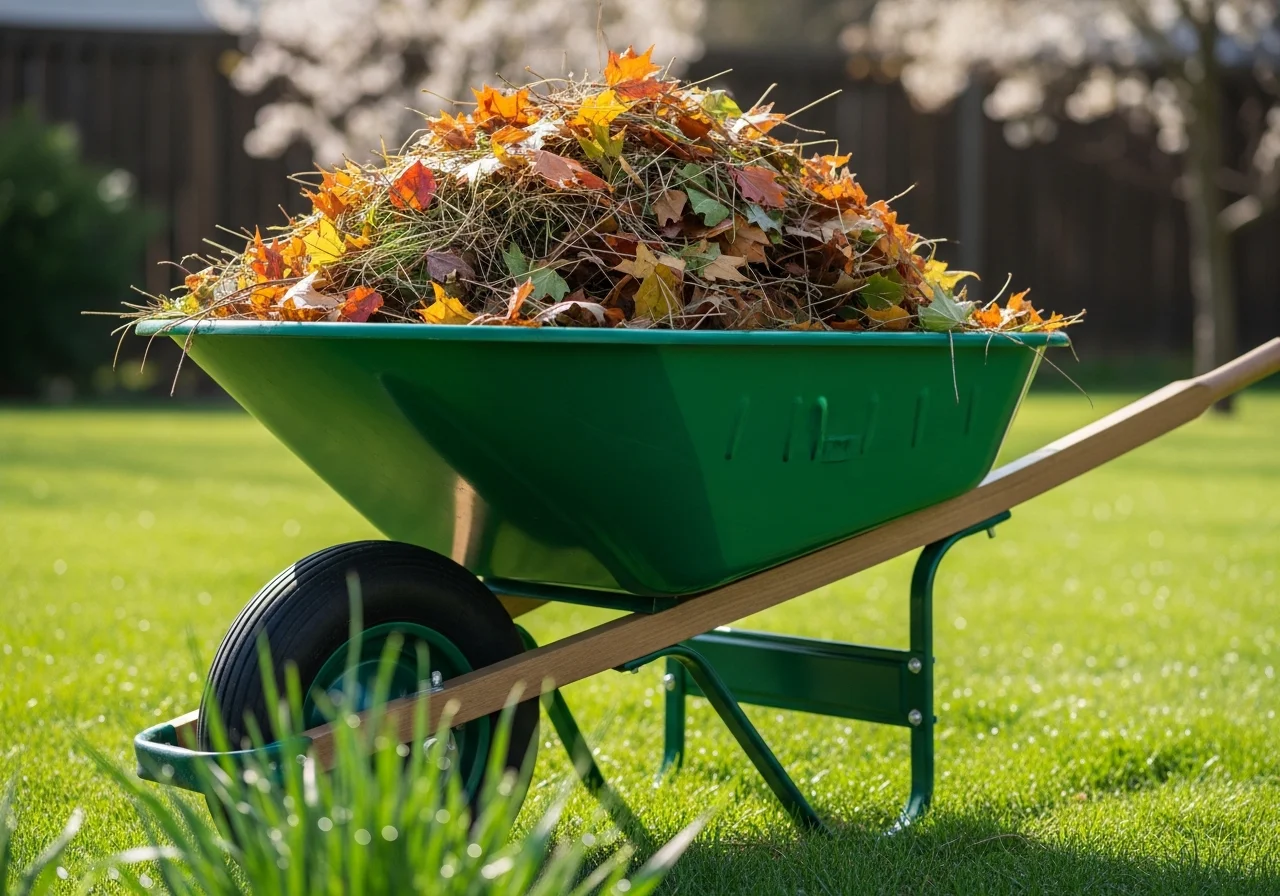
Wheelbarrow
Professional Tip
"Load debris at the centre of the tub, not the back — front-heavy loads tip on slopes and make steering harder. On soft spring soil, pneumatic tires cause less turf damage than solid rubber."
Difficulty
Beginner
Rental Needed?
No
A wheelbarrow is the logistics tool that makes everything else efficient. Raked debris, cut-back stems, dethatching material, pulled weeds, and removed mulch all need to move off the property. Without a wheelbarrow, multiple trips with smaller bags slow the entire cleanup by 40–60%. A 6-cubic-foot contractor wheelbarrow handles most GTA residential properties in a single pass.
Why It Matters for Spring Cleanup:
Speed matters in spring cleanup — the ground is soft in April and every extra foot-traffic pass compacts the recovering turf. A wheelbarrow reduces the number of passes dramatically, protects the lawn, and lets crews work faster. Haul-away is the final step — leaving debris piled at the curb is common but leaving it on the lawn even temporarily causes suffocation patches.
GTA-Specific Note:
If you're DIY-ing the cleanup, rent or borrow a proper 6 cu ft contractor wheelbarrow rather than using a garden cart. Garden carts tip on slopes and don't move efficiently through wet spring soil. Most equipment rental shops in the GTA rent wheelbarrows for ~$25/day.