Toronto lawns explode with weeds every spring because winter weakens your grass — through ice sheet compaction, road salt damage, and nutrient depletion — while weed seeds that spent winter dormant in your soil germinate the moment temperatures rise above 5°C. The fix involves more than pulling dandelions: you need to address the underlying lawn density problem, or weeds will return every season. Trim Gym's fertilization and weed control program treats the cause, not just the symptom.
What Actually Happens to Your Lawn Over a Toronto Winter
Every GTA winter puts your lawn through a series of stress events that individually are manageable — but combined over five months leave your grass thin, weakened, and wide open for weed invasion. Understanding what happened is the first step to fixing it.
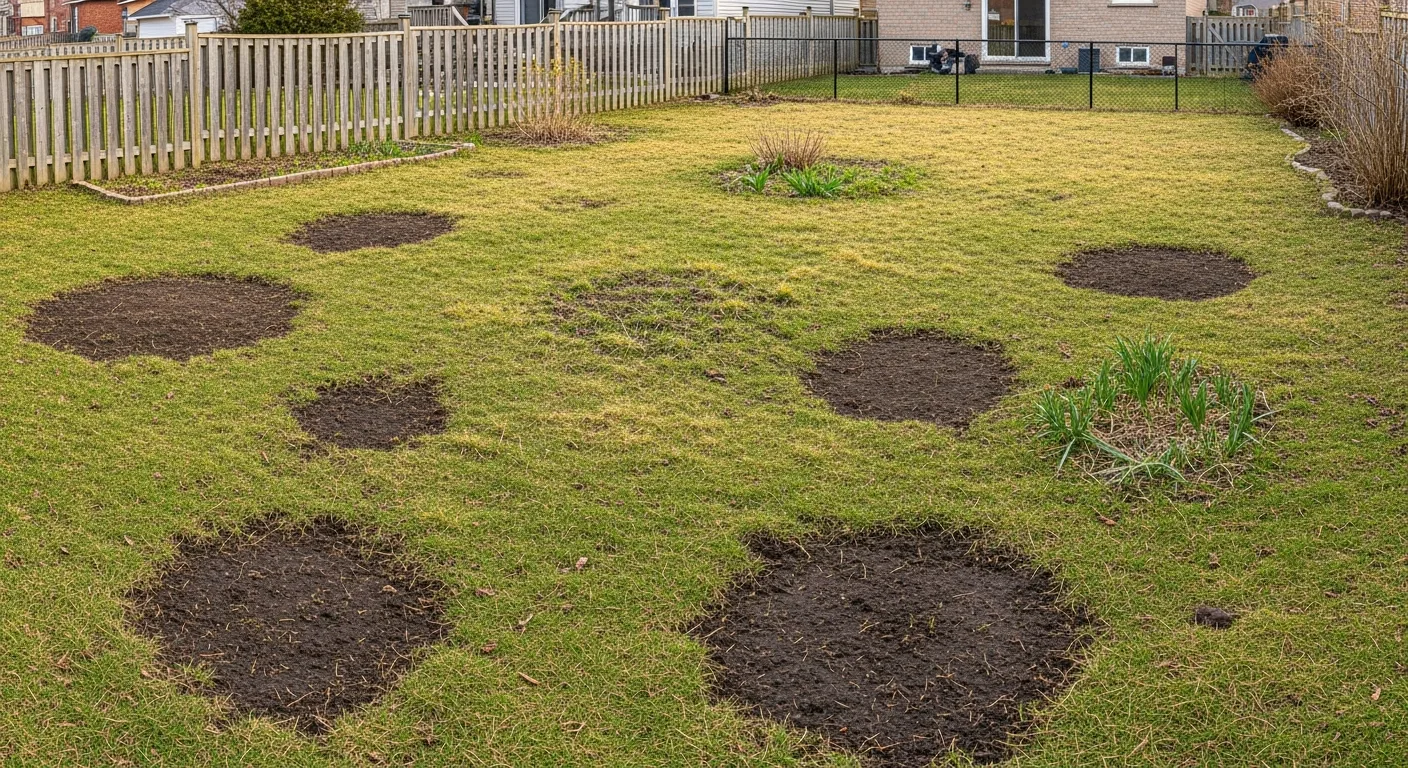
Ice sheet compaction is the biggest culprit most homeowners never think about. When rain falls on frozen ground and then refreezes, it creates an ice layer that sits directly on your lawn for weeks at a time. Grass blades trapped under ice cannot breathe — the process is called anoxia, and it kills grass crowns in sections, leaving you with irregular dead zones in spring. These dead zones are the first places weeds colonize.
Road salt drift affects any lawn within 15 metres of a treated road or driveway. Salt raises the sodium content in your soil, which draws moisture out of grass roots through osmotic pressure — the same way salt kills a slug. Salt-damaged grass turns brown and dies in a characteristic pattern along road-facing edges and driveway borders. If your worst weed problems are along the front of your property near the sidewalk, salt damage is almost certainly involved.
Freeze-thaw cycling loosens your soil structure. Every time the ground thaws and refreezes, soil particles shift and separate — leaving a loose, well-aerated seed bed that is ideal for weed germination. Dandelion seeds, which are wind-dispersed and incredibly tiny, find these loose surface conditions perfect for establishing roots before your grass can compete.
The Weed Window: Why Spring Is the Worst Time
Weed seeds germinate at soil temperatures of 5–10°C. Toronto lawn grass (primarily Kentucky bluegrass and fescue blends) doesn't actively grow until soil temperatures reach 10–13°C. This 3–8 degree gap means weeds have a head start of 2–4 weeks every spring — growing and establishing root systems before your grass can compete. By the time your lawn starts actively growing, weeds are already rooted in and competing for nutrients and light.
The 5 Weeds Toronto Homeowners Find Every Spring
Not all spring weeds behave the same way — and treating the wrong species the wrong way wastes money and makes the problem worse. Here is what you are actually dealing with in a typical Toronto lawn:
1. Dandelion (Taraxacum officinale)
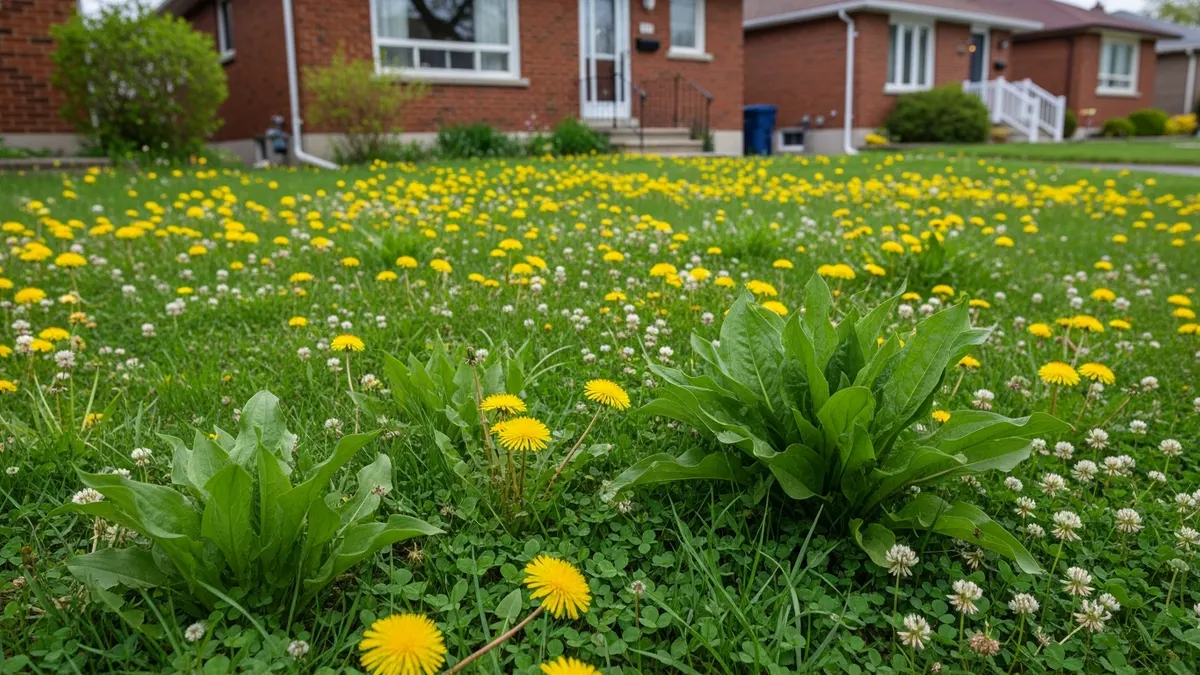
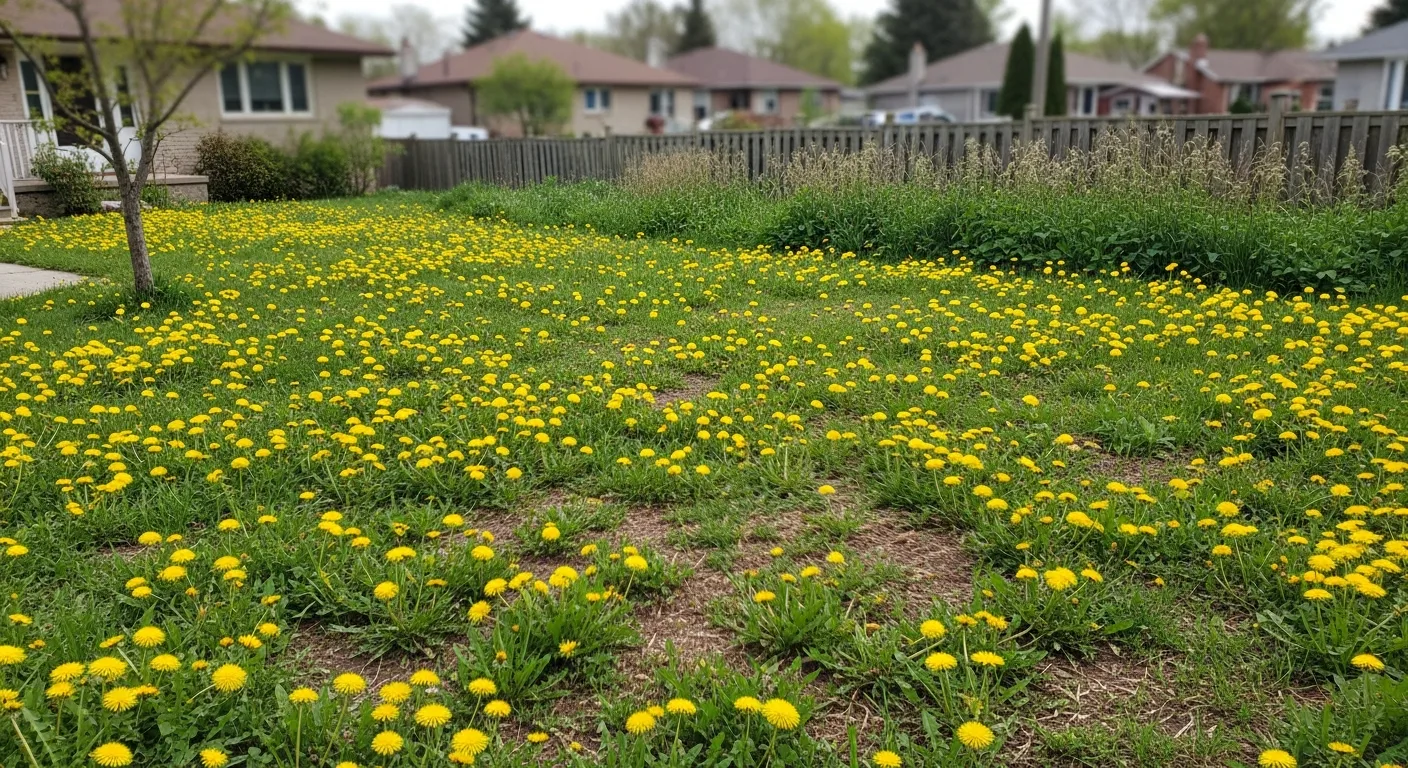
The most visible spring weed in Toronto. A single dandelion produces up to 15,000 seeds per season — each capable of traveling up to 5km on the wind. The taproot goes 8–10 inches deep. Pull it without removing the root and it regrows within 2 weeks. Dandelions thrive in compacted, acidic, nutrient-poor soil — the exact conditions left by a hard GTA winter.
Fix: Deep taproot removal while soil is moist, or selective broadleaf treatment.
2. Creeping Charlie (Glechoma hederacea)
Low-growing, spreads by horizontal runners (stolons) that root at every node. Once established in a shaded area of your lawn, creeping charlie is extremely difficult to remove by hand — every broken piece of runner left in the soil starts a new plant. It thrives in damp, shaded conditions, which is why it's common on the north side of Toronto homes.
Fix: Multiple broadleaf treatments in fall and spring combined with improved sun exposure where possible.
3. Broadleaf Plantain (Plantago major)
The flat, oval-leaved weed that forms rosettes in high-traffic areas. Plantain is a compaction indicator — it grows best in compressed soil where grass struggles to compete. If you have plantain concentrated along pathways, near fence gates, or at the edge of your driveway, those areas have soil compaction issues that need to be addressed with aeration.
Fix: Hand removal of taproot + core aeration to address the underlying compaction.
4. White Clover (Trifolium repens)
Clover has made a comeback in GTA lawns over the past decade as a nitrogen indicator — it grows most aggressively in nitrogen-deficient soil. If you have large clover patches, your lawn is under-fertilized. Clover is also nearly impossible to remove permanently without addressing soil fertility. Many homeowners accidentally fertilize their clover by applying lawn food — clover out-competes thin grass for applied nutrients.
Fix: Broadleaf treatment + soil fertility program to out-compete clover with healthy grass.
5. Annual Bluegrass / Poa Annua
Light green, clumpy grass-weed that germinates in cool, wet spring conditions. It looks like grass but grows faster and dies out completely in summer heat, leaving bare patches exactly where it grew. Many Toronto homeowners mistake Poa annua patches for their lawn going dormant — it is actually a weed that will leave you with bare spots by July.
Fix: Preventive pre-emergent treatment in early spring (before soil reaches 10°C).
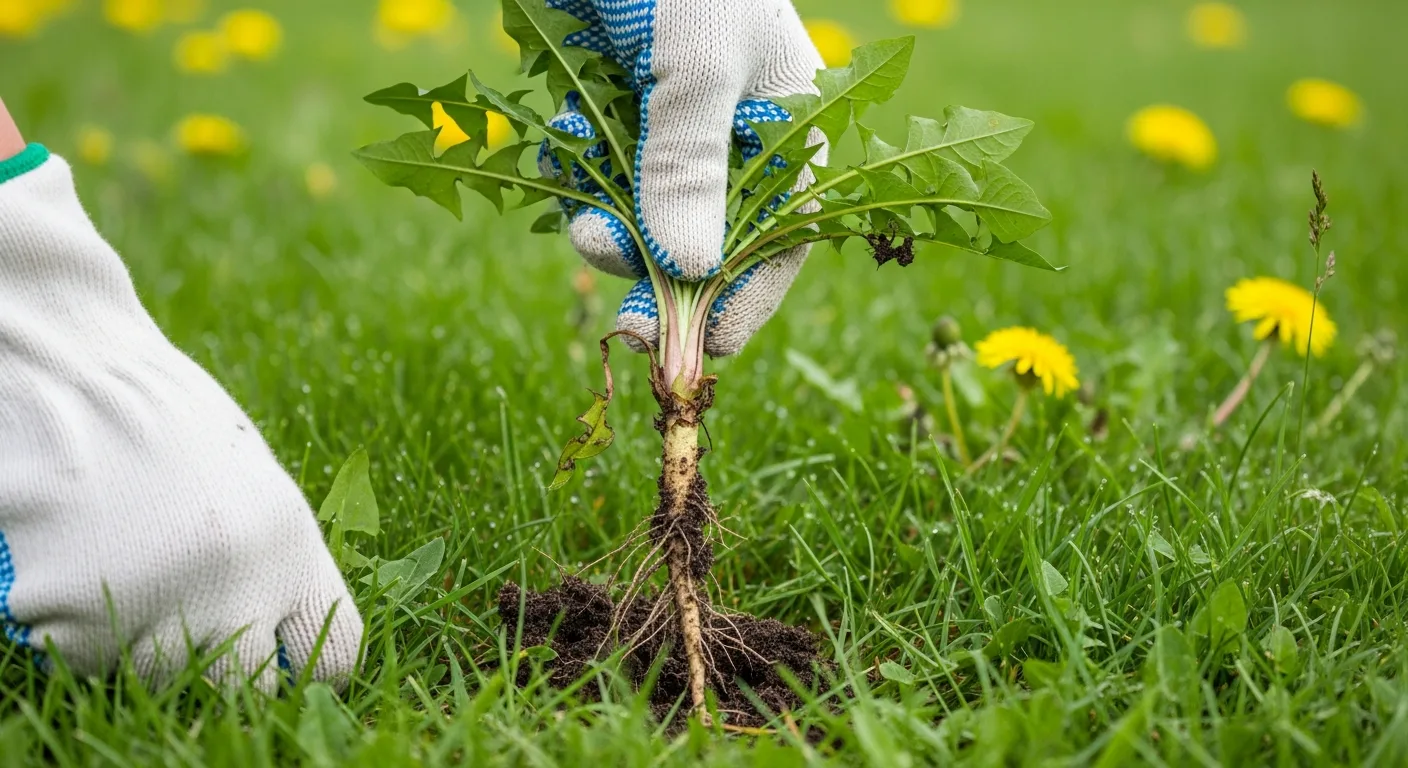
Effective dandelion removal requires pulling the full 8–10 inch taproot. Snapping the stem without removing the root simply delays regrowth by 2 weeks.
DIY Weed Control vs. Professional Treatment — What Actually Works
For a handful of dandelions in an otherwise healthy lawn, hand-pulling works well — especially in spring when soil is moist and roots come out cleanly. Water the area the night before, use a long-handled weeder tool, and pull when the soil is soft enough to get the full taproot. Do this right and the dandelion will not come back.
But for a lawn with widespread weed coverage — where weeds represent more than 20–30% of the surface area — hand-pulling becomes a losing battle. You are removing visible plants while leaving thousands of dormant seeds in the soil. The moment you create a bare patch by pulling a weed, a new weed seed fills it within weeks.
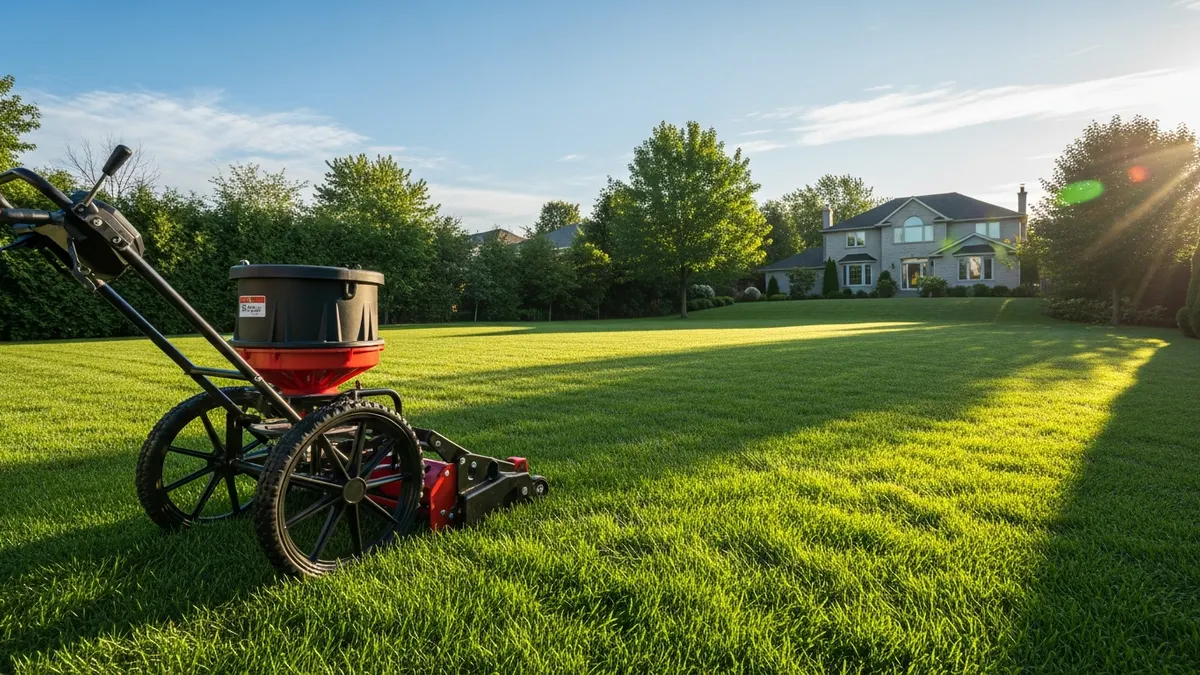
Professional weed control programs work differently. Rather than reacting to visible weeds, a well-designed program like Trim Gym's fertilization and weed control plan combines selective broadleaf treatment (which kills broadleaf weeds without harming grass) with a fertility program that thickens your lawn turf — so bare soil where weeds germinate simply disappears over the season.
| Approach | Best For | Limitation |
|---|---|---|
| Hand-pulling | Sparse dandelions (<10 plants), moist soil | Leaves dormant seeds; labour intensive at scale |
| DIY spray (non-selective) | Isolated spot treatment away from grass | Kills surrounding grass; leaves bare soil for new weeds |
| DIY broadleaf selective | Spot-treating known species | Timing-sensitive; wrong application rates reduce effectiveness |
| Professional 3–4 application program | Widespread infestation; long-term weed prevention | Higher upfront cost; requires patience across season |
The Right Mowing Height Suppresses Weeds — Most Toronto Homeowners Get This Wrong
One of the most effective and completely free weed-suppression tools is your lawn mower height setting — and most GTA homeowners have it set too low. Cutting grass shorter than 3 inches does three things that help weeds and hurt your lawn:
- Exposes soil to sunlight: Weed seeds need light to germinate. Grass mowed at 3+ inches creates a shading canopy over the soil surface that physically prevents many weed seeds from germinating. Mow at 2 inches and you remove that canopy.
- Weakens grass root depth: Grass root depth is directly proportional to blade height. A 3-inch blade supports a root system 6+ inches deep. A 2-inch blade supports 3–4 inch roots — insufficient for competing with tap-rooted weeds in compacted Toronto clay soil.
- Triggers stress response: Cutting more than one-third of the blade length at once (the 'one-third rule') shocks the plant. Stressed, short-cut grass diverts energy from root growth to blade regrowth — leaving it vulnerable during the 5–7 days of weed-germination window after each mow.
Every Trim Gym mowing visit is performed at exactly 3 inches — the proven optimal height for GTA cool-season grasses. It is one of the reasons customers notice their weed population declining over the course of a full season of professional service, even without a dedicated weed control application.
How to Prevent Weeds From Coming Back Next Winter
The best time to prevent next spring's weeds is this fall. A fall fertility program that thickens your lawn before winter gives it a head start on weed seeds come spring. The steps that make the biggest difference are:
Core Aeration (September/October)
Relieves soil compaction that favours plantain, clover, and creeping charlie. Opens channels for roots to go deeper before winter freeze. See our guide on core lawn aeration in the GTA.
Overseeding Thin Areas
Every thin or bare area is a future weed patch. Overseeding after aeration fills gaps with competitive grass before weeds can claim the territory.
Fall Fertilization (October, before first hard frost)
A slow-release fall fertilizer feeds roots through November, giving your grass a stronger root bank to draw on in spring when it's competing with early-germinating weeds.
Final Mow at 2.5 Inches
Drop your final fall cut slightly (to 2.5 inches) to reduce the risk of snow mould — but not so short that you remove the protective canopy heading into winter.
Spring Pre-Emergent (April)
Applied before soil temperatures reach 10°C, a pre-emergent treatment prevents weed seeds from germinating. Timing is critical — it must go down before the weed seed activates. This is included in Trim Gym's full fertilization program.
Frequently Asked Questions — Toronto Spring Weeds
Can I use vinegar to kill weeds in my Toronto lawn?
Household vinegar (5% acetic acid) will burn the top of weeds but does not kill the root. The weed regrows within 1–2 weeks. Horticultural vinegar (20% acetic acid) is more effective but will kill any surrounding grass on contact and can acidify your soil if overused. It is a non-selective burndown, not a systemic treatment. For lawn weeds, it is generally not the right tool.
How do I know if I have a weed problem or a lawn disease?
Weeds fill in — they are plants actively growing into bare or thin areas. Lawn diseases leave dead grass without replacement. If you see greenery (even unwanted greenery) filling your spring lawn, that is a weed problem. If you see dead brown or grey areas with no growth at all, check for snow mould or fungal disease. Our winter damage recovery guide covers both.
Is clover bad for my lawn?
Clover itself is not toxic to lawns — it actually fixes atmospheric nitrogen into your soil, which feeds surrounding grass. However, clover outcompetes thin grass and spreads aggressively in low-fertility soil. Most homeowners want a uniform lawn appearance, and clover patches are visually inconsistent. More importantly, clover is a sign your soil needs fertility help — address the fertility, and the grass will eventually out-compete the clover on its own.
When is the right time to start weed treatment in Toronto?
The window for most effective spring weed treatment in the GTA is mid-April through late May — when weeds are actively growing but before they go to seed. Treating after seed set (the dandelion puffball stage) stops the current plant but does nothing for the thousands of seeds already dispersed. If you are reading this in April, now is exactly the right time to act. Contact Trim Gym for a spring weed assessment.