The 7 most common lawn mowing mistakes in the GTA are: cutting too short (scalping), mowing wet grass, using dull blades, mowing in the same direction every time, skipping edging, bagging clippings instead of mulching, and mowing too infrequently during peak growth. Each mistake independently weakens turf, opens the door to weeds, and adds cost over time.
Key Facts
- Cutting grass shorter than 2.5 inches during summer exposes the soil to direct sunlight, increasing soil temperature by up to 10°C and causing moisture loss at more than twice the normal rate.
- Dull mower blades tear grass rather than cut it, creating ragged ends that turn brown within 24–48 hours and significantly increase the lawn's vulnerability to fungal disease.
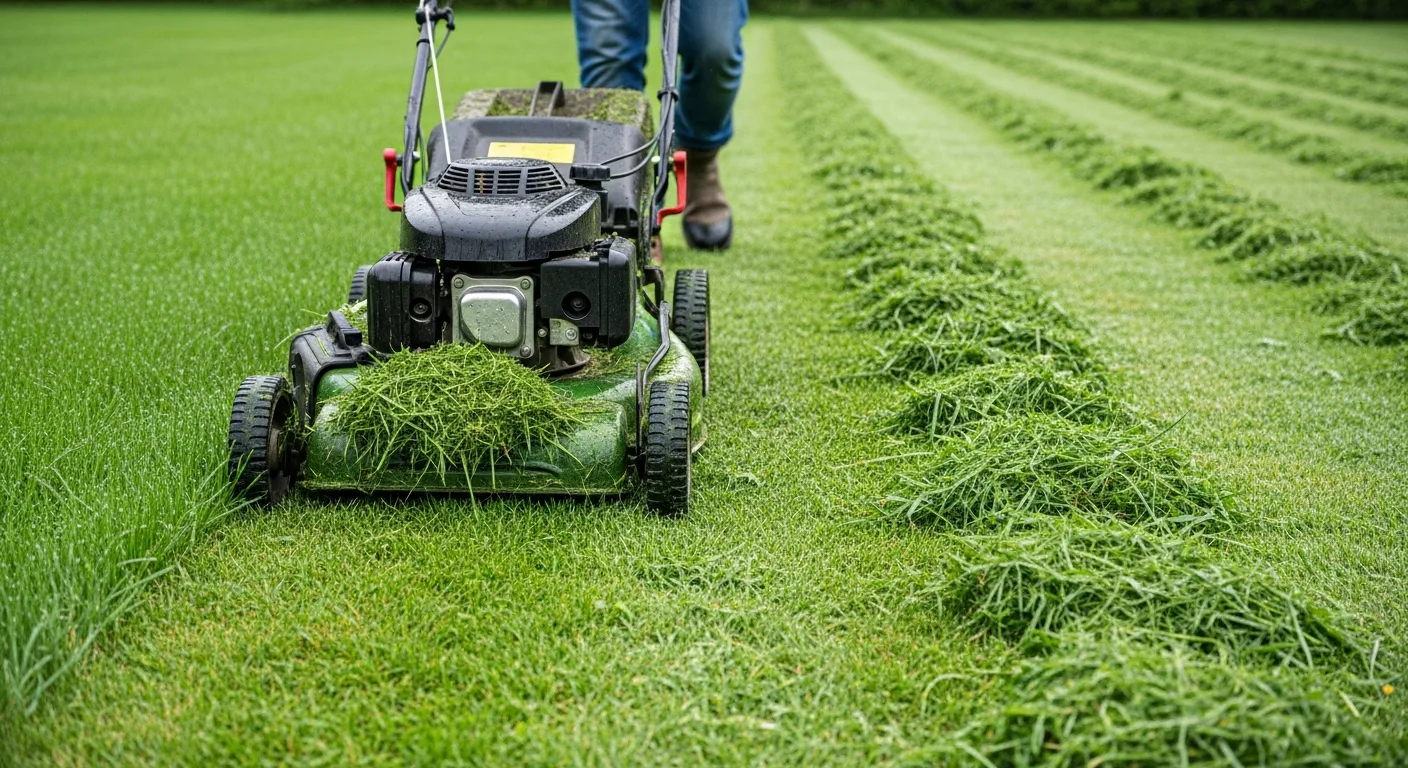
- The University of Guelph Turfgrass Institute recommends mulching grass clippings back into the lawn — they decompose within a week and return the equivalent of one full fertilizer application per growing season.
Most lawn problems in the GTA aren't caused by disease, pests, or poor soil — they're caused by how the lawn is being mowed. Cutting too short, mowing at the wrong time, or going too long between cuts are the root cause of the thin, patchy, weed-filled lawns you see on otherwise well-maintained properties across North York, Vaughan, Markham, and Scarborough.
Mistake 1: Cutting the Grass Too Short
Scalping — cutting the grass too short — is the single most damaging mowing mistake you can make. When the blade is cut below 2 to 2.5 inches, the plant loses most of its photosynthetic surface area and is forced to redirect energy from root development to regrowing the blade. The result is a weakened root system, increased vulnerability to drought stress, and a thinned lawn that invites weed infiltration.
In the GTA, the correct mowing height for most lawns is 3 to 3.5 inches during the summer months. Many homeowners set their mower lower because they think a shorter cut looks neater, or because they want to go longer between cuts. Both instincts work against a healthy lawn.
How a package fixes it:
A professional lawn mowing service sets the cut height correctly for each season and adjusts throughout the year. You never have to think about blade height settings.
Mistake 2: Mowing with a Dull Blade
A dull mower blade doesn't cut grass — it tears it. The ragged edge left by a dull blade creates thousands of micro-wounds across every blade of grass on your lawn, turning the tips brown and leaving the lawn looking grey and stressed for several days after each mow. Over time, repeated tearing weakens individual grass plants and creates entry points for disease.
The tell: if your lawn looks brownish or grey-tipped within a day or two of being cut, a dull blade is almost always the reason. Sharp blades leave clean, white cuts at the blade tips that are nearly invisible.
How a package fixes it:
Professional lawn care services maintain and sharpen equipment regularly. A reputable operator runs sharp blades on every visit — it's a basic standard of the trade.
Mistake 3: Mowing Wet Grass
Mowing a wet lawn creates a cascade of problems. Wet grass blades clump together under the mower, resulting in uneven cuts, clumping clippings that smother the lawn beneath them, and wheel ruts in soft soil. It also spreads fungal disease more readily, since the moisture and the mechanical action of the mower move spores across the entire lawn surface in a single pass.
The instinct to mow immediately after rain — especially if the cut is overdue — is understandable, but the result is almost always a worse-looking lawn than if you'd waited another day.
How a package fixes it:
A professional service monitors weather and schedules mowing on appropriate days. Rain-day makeup visits are handled within 24 to 48 hours on dry ground.
Mistake 4: Always Mowing in the Same Direction
If you mow in the same direction every time, the grass blades lean in that direction over time — a phenomenon called grain. A heavily grained lawn looks flat and uniform from one angle and shaggy from another. More practically, the mower wheels repeatedly compress the same tracks into the soil, leading to soil compaction over time in those specific lines.
Alternating the mowing direction each visit — north-south one week, east-west the next, diagonal on a third pass — promotes upright blade growth and avoids repeated soil compaction in the same lines.
How a package fixes it:
Experienced crew members know to alternate direction on each visit without needing to be reminded. It's standard practice for any professional operation.
Mistake 5: Skipping Edging and Trimming
Mowing without edging is like making a bed without straightening the pillowcases. The main surface looks fine from a distance, but the borders give the whole thing away. Grass that creeps over the edges of driveways and walkways makes a well-cut lawn look unfinished. String trimming that gets skipped leaves ragged grass rings around every tree and fence post on the property.
Edging and trimming are not optional finishing touches — they are integral parts of a complete mowing service. A lawn without them looks like a halfway job, regardless of how well the main cutting was done.
How a package fixes it:
At Trim Gym, edging and trimming are included on every single visit. There is no 'edging month' or 'trimming on request.' Every visit is complete.
Mistake 6: Letting the Lawn Get Too Long Between Cuts
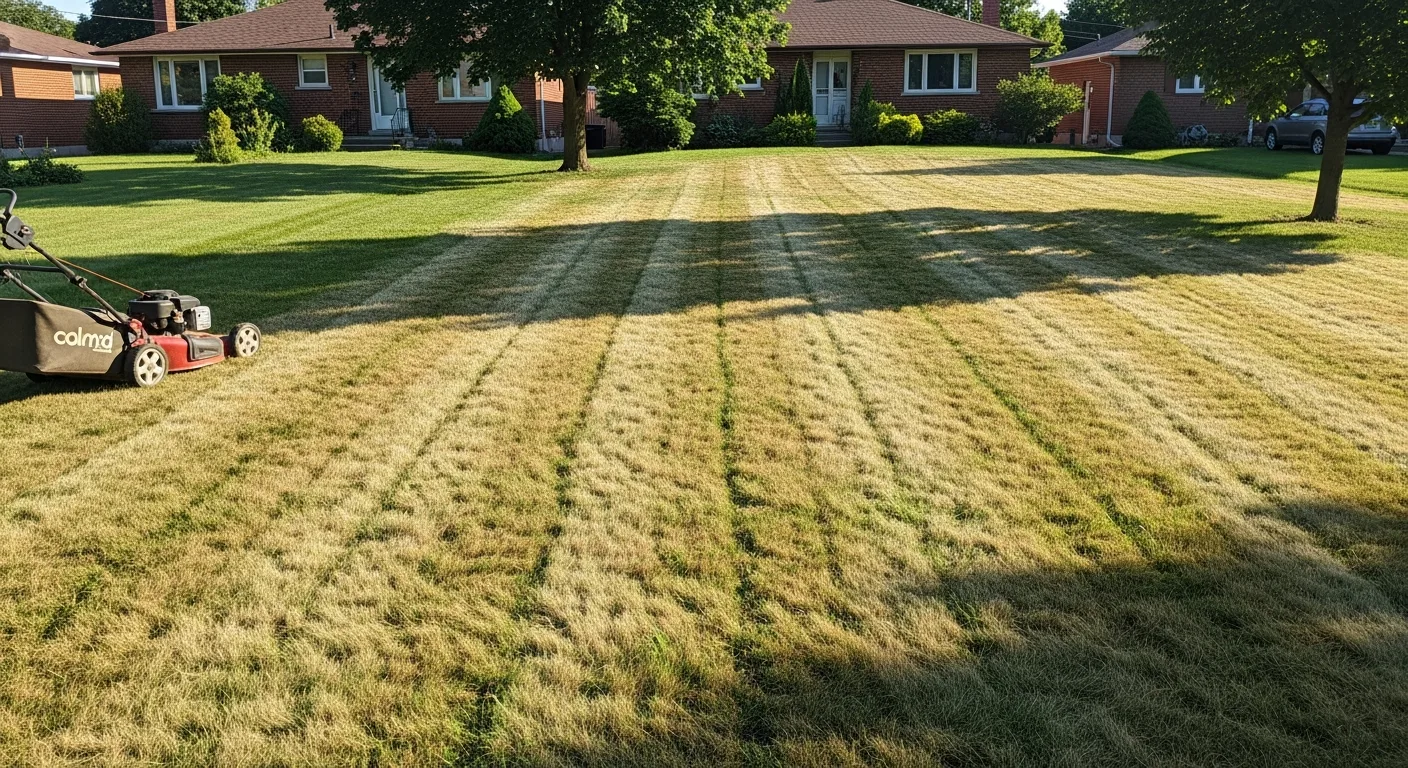
Waiting too long between mowing — whether due to a skipped week, a bi-weekly schedule during peak growth, or simply forgetting — forces the mower to remove more than one-third of the blade in a single pass. This is the one-third rule violation, and it's one of the most common causes of the yellowed, stressed appearance GTA lawns develop in mid-summer.
When you remove more than one-third at once, the suddenly exposed lower portion of the grass blade — which lacks chlorophyll because it hasn't seen light — turns the lawn yellow or straw-coloured for several days. The stress also triggers the grass plant to put energy into survival rather than root growth, weakening the lawn's long-term resilience.
How a package fixes it:
A consistent mowing schedule — weekly during peak growth periods — keeps the lawn in the healthy cutting window. The one-third rule is never violated when frequency matches growth rate.
Mistake 7: Mowing During the Hottest Part of the Day
Mowing in the midday heat of a GTA summer stresses both the lawn and the crew. Freshly cut grass loses moisture most rapidly in full sun and high temperatures — right at the moment when the mower has just removed the blade that was shading the crown and roots. The result is heat stress that compounds the normal physical stress of being cut.
The best time to mow is mid-morning, after the dew has dried but before the heat of the afternoon — typically between 9 AM and noon. Evening mowing is acceptable but leaves wet clippings on the lawn overnight, which can promote fungal conditions.
How a package fixes it:
Professional services route their crews in the morning hours. By the time the heat peaks, experienced crews have completed most of their scheduled properties.
The Common Thread: Consistency Solves Most Lawn Problems
You'll notice that most of these mistakes come down to inconsistency — the wrong height, the wrong timing, the wrong frequency, or skipped steps. A well-run weekly or bi-weekly lawn mowing package eliminates inconsistency from the equation. The right height, the right direction, the right frequency, the right timing, and the right equipment — handled every visit, without variation.
That's the core value of a professional mowing package: not just saving you the time of doing it yourself, but ensuring the work is done correctly and consistently in a way that actually produces a healthier, better-looking lawn over time.
Stop Guessing. Get It Done Right, Every Visit.
Weekly and bi-weekly packages from $45/visit. All of the above — handled every time.
Frequently Asked Questions
What is the most common lawn mowing mistake?
Cutting the grass too short is the most common and most damaging mowing mistake in the GTA. Most homeowners should be cutting at 3 to 3.5 inches in summer, but many cut at 2 inches or lower, stressing the grass and creating conditions for weed infiltration.
How do I know if my lawn is being cut at the wrong height?
If your lawn turns yellow or grey-tipped after mowing, looks thin and patchy through summer, or has a weed problem that seems to get worse each year, low cut height is a likely contributing factor. A professional service will assess your lawn on the first visit and set the correct height for your grass type and the season.
Can I fix a scalped lawn?
Yes, but it takes time. Stop scalping immediately and raise the cut height. The lawn will typically recover within 2 to 4 weeks with consistent correct-height mowing, provided the damage wasn't severe enough to kill the grass crown. Deep scalping that kills the crown may require overseeding in spring or fall.
How often should I edge my lawn?
Edging should be done on every mowing visit to maintain clean borders. Some homeowners edge less frequently — monthly or on alternating visits — but the results are noticeably inferior to a lawn that is edged consistently. At Trim Gym, edging is included on every visit.